

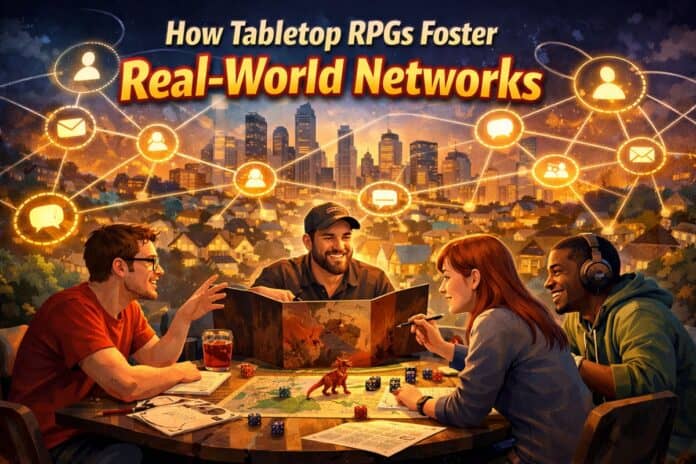

The digital age promised a global village but delivered a lonely crowd. While we spend hours scrolling through curated feeds, the actual feeling of connection often slips through our fingers. This irony is why so many people are turning back to the physical table.
Tabletop Roleplaying Games (TTRPGs) have transformed from a niche hobby into a powerful engine for building real-world networks. These games do more than fill a Saturday night. They act as a social glue that sticks people together through shared stories and late-night snacks.
The Raw Social Power of the Table
Social media is built for passive consumption. You look at a screen and maybe leave a comment. TTRPGs demand your full attention. You have to sit across from someone and look them in the eye.
This creates a specific kind of social architecture. When you play, you navigate complex human emotions while chasing a common goal. This builds a level of trust that a Discord message simply cannot touch.
Being in a physical room changes the game. You notice a friend’s smirk or a nervous tap of a pencil. You share the same air and usually a pizza. These small, sensory details are the literal building blocks of friendship. Memories made during a four-hour session are heavy. They have weight and staying power that a “like” on a photo lacks.
Swapping Screens for Real Interaction
The world is moving toward a hybrid life. Many fans start their journey online by watching a stream. But eventually, the urge to roll real dice takes over. This shift is a massive part of how we socialize now.
Local game shops and quiet cafes serve as vital “third spaces” away from the grind of work. In these spots, a lawyer might team up with a barista or a student. The game is a great equalizer.

It lets people from totally different walks of life find common ground. It builds bridges that would never exist in a traditional office or a filtered social feed.
Big Events and Professional Sparks
Gaming conventions are the Super Bowl of networking. Events like Gen Con or local weekend expos pack thousands of people into one space. These aren’t just for buying books. They are professional goldmines. A quick chat in a lunch line can turn into a job offer or a creative partnership.
Conventions mix everyone together. Indie writers talk to big publishers. Artists find new fans. The shared love for the game acts as a perfect icebreaker. It kills the awkwardness of “networking” because you already have something to talk about. You aren’t just swapping business cards. You are swapping stories.
The Magic of the Weekly Meetup
If big conventions are too much, local meetups keep the fire burning. These small groups are the heartbeat of the hobby. They offer a safe spot for beginners and newcomers to fail, learn, and become the talk of the town in the future.

These meetups often turn into “forever groups” that meet for decades. Consistency is the secret sauce here. Seeing the same faces every week builds a support system. You move from being strangers to being the people who show up for each other when life gets hard. Finding your tribe is the first step toward this. You can find D&D groups online that fit your vibe and your zip code to get started.
Living in a Hybrid World
The future isn’t about choosing between a computer and a table. It is about using both. We use apps to schedule the game and websites to build the world. But the payoff happens in the physical world.
This hybrid style fixes the biggest problem of the internet. It uses the web’s speed to handle the boring logistics. Then it uses the table’s warmth to give us the human contact we crave. This balance is why tabletop gaming is such a powerhouse for making friends today.
Solving Problems as a Team
In a game, you can’t win alone. The fighter needs a healer, and the rogue needs a distraction. This forced teamwork is a masterclass in communication. When a group beats a tough boss, they are not just playing; they are practicing how to work together and scale as a team.
These wins and losses create a bond that is hard to break. In an office, it’s a seminar. At the table, it’s an adventure. The strength of these networks is built on imaginary battles, but the friendships they create are 100% real.
Turning off the screen and sitting at a table is an act of rebellion in a digital world. It is a way to find real people and build a life that exists outside of an algorithm. When you join such friendly communities, you are not just playing a game; you are building a network that actually matters.