

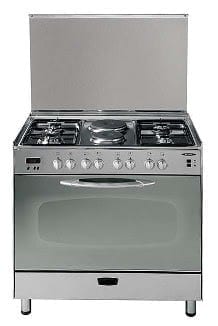

This is a guide to key factors to consider when buying a cooker. A cooker is an essential appliance in the home. A cooker keeps your food warm. You can also boil, fry, bake, and roast/grill with a cooker. Modern cookers have features that put stress off cooking.
Here are a few issues to consider before you buy a cooker. Hope you find it useful.
What Fuel/Energy Source is Available
A cooker requires energy to cook your food. Before you buy a cooker, you must ensure that the cooker can be energised by locally available energy sources. Some options available include Electric, Gas, Kerosene, Coal, and firewood.
However, if you live in a city or in a developed country like the US, UK, or Canada, your only options are most likely to be gas, electricity, and maybe kerosene. Gas and Electricity are the cheapest sources of energy for your cooking. Hence, a gas and electric cooker is highly recommended if these fuels are locally available at the right price.
Some gas cookers come with an electric cooker. Combo cookers (electric and gas cookers combined) are recommended if the budget allows. For example, in Nigeria or in other countries with unreliable electricity supply, buying an electric-only cooker might mean starvation.
Before you buy a gas cooker, you need a gas connection in your home, or if you live in a country where cooking gas is distributed via pressurised cylinders (like Nigeria), you need at least one such gas cylinder.
If you do not have access to electricity or a gas supply, or you are buying one to use in such a place (say for cooking in the village), you should then consider coal or kerosene stoves/cookers. These stoves are, on average, cheaper than gas and electric cookers, but their fuel cost is usually higher.

Electric/gas cookers also cook faster and better. Gas cookers cook faster than electric cookers, but electric cookers are more economical.
What Cooking Capacity
Once you have decided on the fuel/energy source best suited for your location, you should then consider the capacity you need. The capacity of the cooker you buy depends on the family size.
Combo Gas / Electric Cookers
Here are some suggestions for combo gas/electric cookers:
For a family of two to four, a cooker with two/three gas burners and one/two electric heaters will be adequate.

Families with more than four can go for the four-gas burner and one/two electric cookers.
Since cookers are not bought very often, you should not just look at the current size of the family when buying a gas or electric cooker. You should also consider the future growth of the family.
Gas Cookers
If you decide to go for a gas-only cooker, a four-burner gas cooker is okay for households of two. For mass cooking with large pots, you need gas burners with burners large enough to handle the extra-large pot.
Other options
Sealed Plate or Ceramic Plate
There are two types of electric heaters (hobs) available. The solid (sealed) plate is more popular because it is cheaper but cooks more slowly. Their elements are not visible.
Ceramic plate hobs are more responsive (faster) than sealed hobs. These hobs have more control options than sealed plate hobs. Ceramic hobs are recommended if they are available and the budget allows. The electric element in a ceramic plate hob is visible.
Freestanding or built-in
Freestanding cookers are more popular. They are great if you have limited space. They are also easy to move around.
If space is not an issue, you can buy a built-in cooker. Built-in cookers require special installation.
Oven, Grill, and Turnspit
If you are an all-round cook or you have one in your household, you should go for a cooker with an oven and a grill. These are most common in gas and electric cookers. There are different configurations of oven/grill available in the market today.
The single oven/grill has an oven and a grill combined. You can either use it as an oven or a grill, but you cannot bake and grill at the same time. If you want to be able to grill and bake at the same time, you should go for a twin cavity oven/grill.
The twin cavity oven/grill have separate oven and grill with the grill on top. They are by far the most popular and are recommended.
The double oven models come with two ovens and a grill, giving more options. These options, however, come at a price. One oven is separate, while the other is combined with the grill.
Ovens may be powered with gas or electricity. Some have fans to aid uniform circulation of heat, making cooking faster.
Auto Timer
Set the duration of baking. Some ovens come with minute minders that will remind you every minute once the preset time elapses.
Catalytic Liners
This is a self-cleaning feature.
Auto ignition
No need for matches, simply turn the knob to ignite the gas hob.
Double Oven Glass
Reduce kitchen heat.
Cylinder Compartment
If you live in a city where gas is distributed via pressurised gas cylinders, you will need a gas cylinder, which will occupy space. A cooker with a cylinder compartment saves space and improves safety. However, means your oven will be small.
Flame Failure
Prevent gas fires.
Power requirement
Electric cookers require a larger current than most home appliances and, hence, will require a dedicated circuit with an appropriate fuse. Voltage rating should also be in conformity with local regulations. In Nigeria, 220V to 240V 50Hz is okay.
Brands
Popular brands of Electric and gas cookers include General Electric (GE), IGNIS, Frigidaire, Electrolux, Whirlpool, Hotpoint, Scanfrost, Royal, Bosch, Tricity, Siemens, Belling, Omaha, and so on.
What Price
Once you are clear with the features you want, you should now go for a market survey to find out how much it will cost. Price depends on the cooker’s features. The price of a dual-cavity cooker in Nigeria may range from 110,000 to 450,000 Naira, depending on features.
A good 2-burner tabletop gas cooker sells for as low as 27,500 Naira. A 2-burner tabletop Electric cooker costs around 25,000 Naira. A single-burner gas cooker costs around 13,000 Naira, while a single-burner electric cooker costs around 13,500 Naira.
Cooker Financing
You must not buy your cooker cash down; you can ask for purchase finance from your bank. Cooker financing will enable you to take home a brand new cooker with a down payment of between 10% and 40%. The balance is paid off over a period of 12 to 24 months.
Product financing provides you with flexible, hassle-free financing for your appliances. If you are credit-worthy, this is a good option, but remember you will pay interest.
Important Notes on Buying Cookers
Once you are sure of what you want to buy and you have a good idea on price, you can then visit an authorised dealer shop or an online store to make your purchase. You may buy from any of the same shops you did your market survey, preferably the one with the best deal.
However, wherever you buy, make sure it is from an authorised dealer shop. An authorised dealer deals directly with the manufacturer or an authorised reseller, and will offer you a warranty on the cooker.
The warranty often involves repair or outright replacement of the cooker if it develops any fault during the tenor of the warranty. The fault must not be a result of your carelessness or abuse. The warranty is often limited, so clarify what the warranty includes and excludes (warranty terms and conditions).
Authorised dealers offer excellent sales and after-sales services. They also offer cooker financing.