

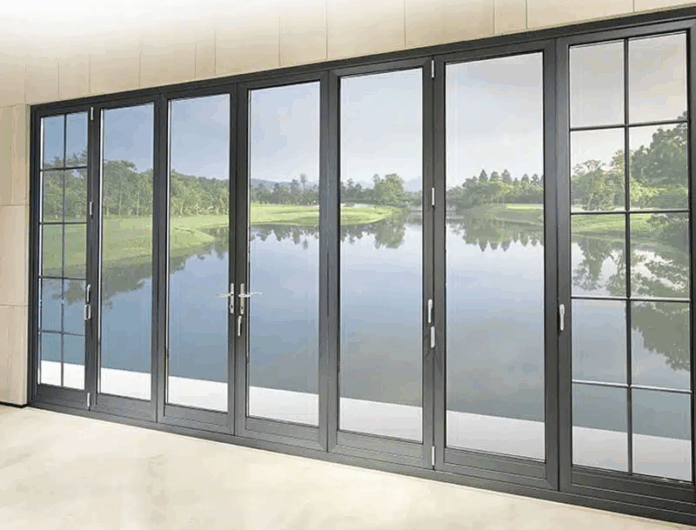

When it comes to modern homes, space optimization plays a pivotal role in how interiors flow, feel, and function. Designing with efficiency in mind allows homeowners to maximize the potential of every square foot without sacrificing aesthetics. In this regard, choosing the right type of door can make all the difference. Aluminum Folding doors, aluminum sliding doors, and aluminum entrance doors each offer unique benefits, but folding doors stand out as a transformative solution for creating dynamic, space-saving layouts.
In this blog, we’ll compare these three door types, exploring how they optimize space and why folding doors might be the best choice for homeowners aiming for versatility and modern style.
What Are Folding Doors?
Also called bi-fold doors or accordion doors, folding doors consist of multiple panels that fold on hinges and stack neatly to one or both sides of the opening.
Popular in modern home designs, they can be used internally to separate rooms or externally to connect interior spaces to patios, gardens, or balconies. Offering a perfect blend of practicality and style, folding doors are a favorite for maximizing usable space.
Why Folding Doors Are Perfect for Space Optimization
Folding doors have revolutionized the way we think about interior and exterior space. Here’s why they’re the epitome of efficient space design:
1. Seamless Indoor-Outdoor Connection
Folding doors allow homeowners to fully open up a room to the outdoors, creating a seamless transition from one space to another. When closed, they still provide stunning views thanks to their large glass panels, but when fully opened, they eliminate any physical barrier. This feature makes small spaces feel much larger while encouraging open-plan living.
Perfect for patios, gardens, and balconies in houses with limited square footage.

Allows natural light to flood the indoor space, making even small areas feel open and airy.
2. Maximized Openings With Minimal Intrusion
Unlike standard doors that swing open into the space, folding doors collapse neatly to the side, taking up minimal room. This makes them ideal for homes where every inch of floor space needs to be utilized efficiently.
Folding doors allow for wide openings, which is particularly advantageous in smaller homes where creating an unobstructed flow is essential.
Their compact stacking design ensures no floor space is wasted, unlike a traditional swinging or hinged door that blocks movement when open.

3. Versatile Design Configurations
Modern homes often require multi-functional spaces that can adapt to different needs. Folding doors allow homeowners to create flexible layouts, opening or closing off spaces as needed.
Use folding doors to divide rooms temporarily, such as between living and dining areas, for privacy or noise reduction.
Create large open-plan spaces for entertaining by folding the doors away entirely.
Folding doors allow you to shift between spaciousness and compartmentalization effortlessly, making them ideal for both studio apartments and expansive homes.
4. Visually Expand Spaces
Thanks to their sleek glass panels, folding doors provide uninterrupted sightlines that visually expand the perception of space. Even when closed, these see-through barriers remove the feeling of confinement, making interiors look much larger than they are.
Glass panels reflect natural light, brightening up rooms.
Frameless or slim-frame bi-fold doors enhance the minimalist, open concept aesthetic that modern homeowners adore.
5. Space Efficiency for Tight Areas
Folding doors are a game-changer for smaller homes and apartments where every square inch matters. Their folding mechanism ensures that they don’t occupy unnecessary space when opened, unlike sliding doors, which require continuous tracking or swing doors that reduce maneuverability.
Specifically useful for wardrobes, closets, or pantries in tight spaces.
Great for conservatories, small deck entries, or creating flexible room partitions.
Sliding Doors: A Space-Saving Alternative
Sliding doors are another contender when it comes to space optimization. They move horizontally on a track, eliminating the need for hinge clearance, which makes them a practical option for narrower spaces.
Advantages of Sliding Doors for Space Optimization:
Ideal for small spaces where there’s no room for doors to swing open.
Provide large glass panels to let in natural light, enhancing the feeling of openness.
Perfect for closets, bathrooms, or areas where you want a minimalistic look.
Where Sliding Doors Fall Short:
Sliding doors require continuous tracks, which are not as versatile as folding doors.
They only open halfway, limiting the width of the opening, unlike folding doors, which can open the entire space.
Sliding doors don’t offer as much flexibility for creating open-plan spaces or easily shifting between separated and open layouts.
Entrance Doors: Functionality Over Space Efficiency
Entrance doors, also known as front or main doors, represent the primary access point to your home and are designed more for security and aesthetics than space optimization.
Strengths of Entrance Doors:
Provide an impactful first impression, enhancing curb appeal.
Combine security features with insulation and weatherproofing.
Available in various materials (wood, fiberglass, steel) for both traditional and modern designs.
Where Entrance Doors Fall Short in Space Design:
Standard swinging entrance doors require clearance, which can eat into indoor or outdoor space.
They aren’t designed for flexible layouts or maximizing transitional spaces, unlike folding doors.
While entrance doors are essential as the first point of contact for visitors, they don’t excel in creating flow between spaces or optimizing square footage like folding doors do.
Why Folding Doors Are the Best for Space Optimization
Choosing the right type of door can transform even the smallest space into something functional and spacious. While sliding doors and entrance doors have their own merits, folding doors provide unmatched versatility for modern homeowners. Here’s why they’re the clear winner for space optimization:
1. Maximum Use of Openings
Whether used as patio doors, room dividers, or closet doors, folding doors open completely to create a seamless flow while taking up minimal storage space.
2. Flexible Design for Multi-Functional Spaces
Folding doors allow you to switch between private, intimate spaces and expansive open areas, making them ideal for homes with adaptable layouts.
3. Ultra-Modern Look with Minimal Footprint
For homes striving for a clean, modern aesthetic, folding doors offer stunning glass panels and slim frames that define contemporary architecture.
4. Perfect for Indoor-Outdoor Living
By connecting your interior with terraces, gardens, or courtyards, folding doors enhance the feeling of openness, which is especially valuable in smaller homes.
For modern homeowners seeking to maximize their living space without compromising style, folding doors are the ultimate solution. Their ability to connect or divide spaces, create seamless flow, and add a contemporary aesthetic makes them the most suitable option compared to sliding and entrance doors.
Whether you’re working with a small apartment or looking to enhance the functionality of a larger home, folding doors offer unrivaled space optimization.