

Early all-in-one oral-care systems often meant an electric toothbrush and a water flosser sharing a base. The products reduced counter clutter but preserved two separate working tools. Their contribution was behavioral: they treated brushing and interdental cleaning as parts of one daily system even before the mechanisms occupied one head.
Waterpik Sonic Fusion moved the integration closer to the mouth. Its water-flosser tip sits inside the sonic brush head, and the handle allows Brush, Floss, and Brush and Floss modes. A large countertop reservoir and hose remain, but the user no longer switches between a toothbrush and a separate jet tip.
The second step was moving water into the handle
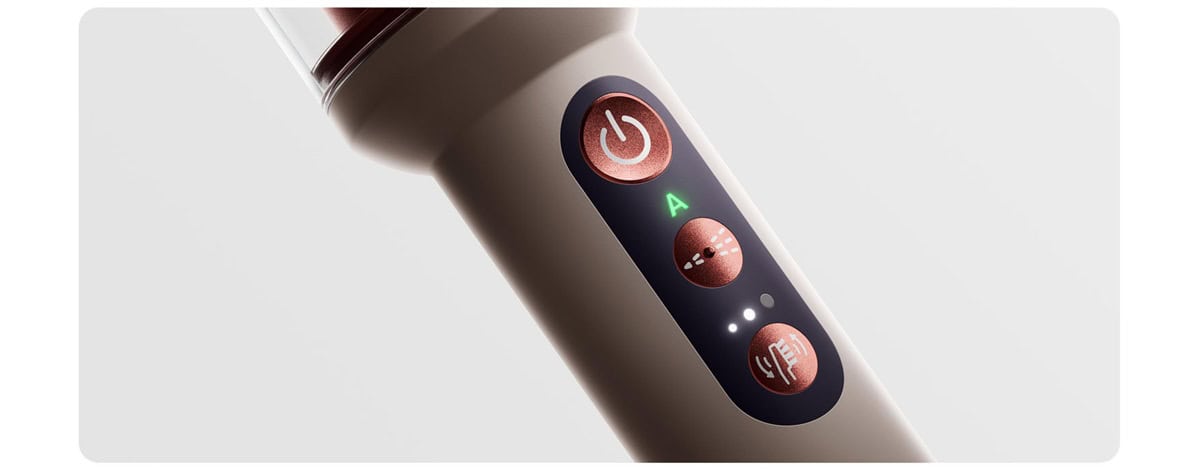
Cordless integration changed the portability equation. Soocas NEOS II places its water supply and pump in the toothbrush body, combining sonic vibration with a timed flossing phase. The Deep Clean sequence automatically moves from two minutes of brushing to one minute of water flossing, while Quick Floss supports a shorter standalone action.
This design makes hybrid cleaning available away from a permanent base, but it also exposes the constraints of compact fluid storage. Capacity competes with grip size, weight and battery space. Users must refill a small tank and still position the outlet manually. Portability improved, while targeting remained in the user’s hand.
The third step was using air instead of carrying water
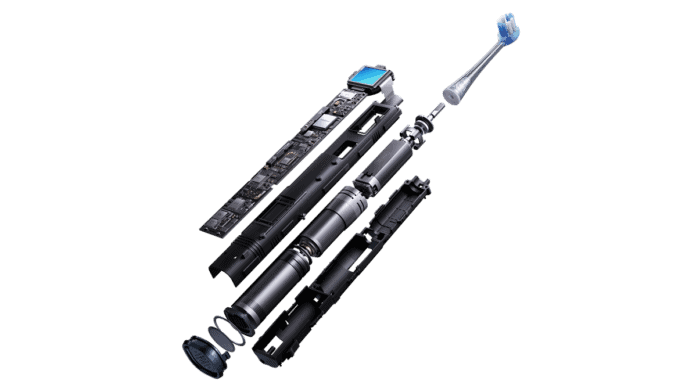
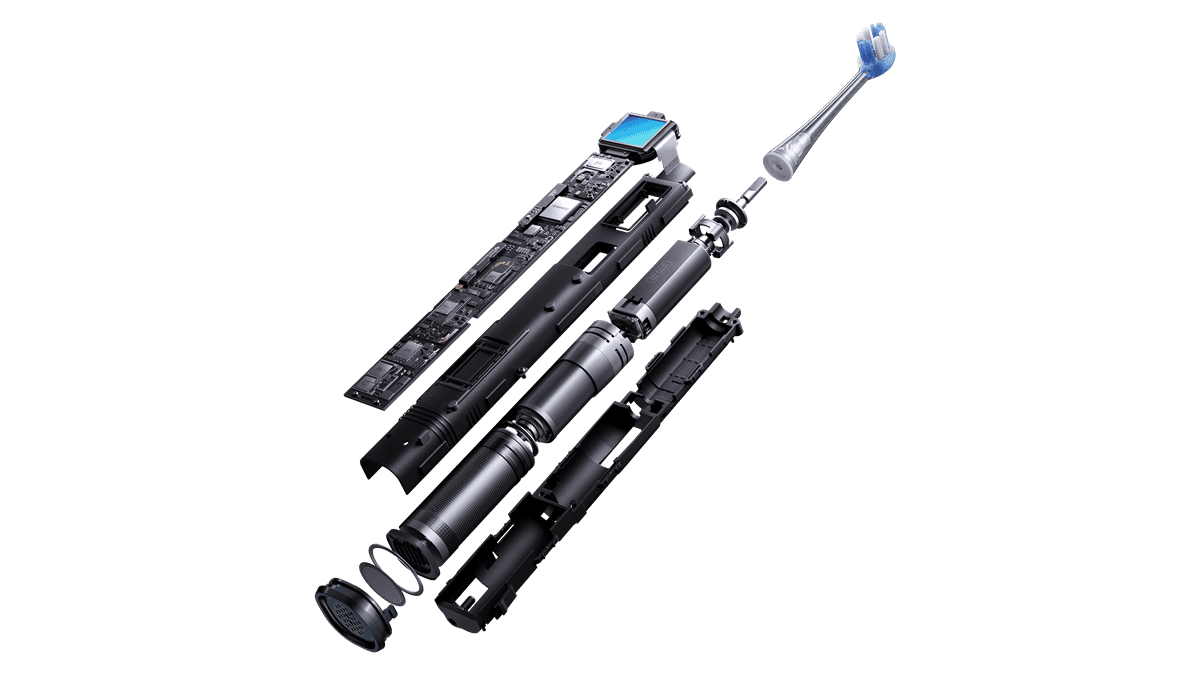
RANVOO AirJet X5 takes a different route to cordless integration. Rather than storing a flossing supply, it pumps air through a sealed pathway and mixes that airflow with toothpaste and liquid already present in the mouth. The Boosted Bubble Chamber creates a microbubble-rich flow, and the Coanda Brush Head guides it around tooth contours.
AirJet combines this flow with sonic and sweeping motion, making it a hybrid Jet toothbrush without a camera or liquid tank. The mechanism is continuous and distributed. Its innovation is not that it copies a countertop water flosser at smaller scale, but that it turns the wet conditions of brushing into part of the delivery system.

Attachment:
AirJet shows how the hybrid category can evolve through airflow and mechanical design rather than a camera.
The fourth step was giving the jet a visual trigger
Dyson CameraJet adds perception to the hybrid sequence. Its camera, stroboscopic lighting and machine-learning system identify and track gaps, then trigger a conical burst of mouthrinse. The tank and diaphragm pump are designed to deliver across changing handle orientations, while variable sonic oscillation continues surface brushing.
This is a significant control change. Waterpik and Soocas rely on the user to position a water outlet. AirJet distributes flow through head geometry. CameraJet attempts to recognize a local anatomical target and respond automatically. The camera is therefore less important as an imaging novelty than as the trigger for a fluid event.

Each generation preserves an earlier compromise
Integration does not erase tradeoffs. Sonic Fusion offers capacity but remains attached to a base. NEOS II offers cordless water but carries a tank. AirJet avoids liquid storage but gives up optical targeting and a conventional water-flosser stream. CameraJet adds automation but also optics, software, specialized fluids and a higher level of system complexity.
The evolution is not a straight line in which every newer design replaces the previous one. It is a branching market. Different users may prefer long-duration water flow, portability, low-contact microbubbles or automatic targeting. The category expands because each architecture resolves one compromise while accepting another.
Behavior changed alongside the hardware
Each stage of integration attempts to remove a point at which users abandon the routine. A shared base makes the flosser easier to remember. A combined head removes the tool change. A cordless tank allows the routine to travel. Air-driven mixing eliminates a separate water supply, while optical targeting tries to reduce the judgment required to find a gap.
That behavioral history is important because oral-care products operate through habit. Engineering can create better access to narrow spaces, but only a repeatable sequence turns capability into daily benefit. A product that saves one step but adds three cleaning chores may not represent progress for the household using it.
The camera era should therefore be understood as another attempt to reduce friction, not as the inevitable destination of every toothbrush. Some users will value automatic vision, while others will prefer transparent manual control or a passive flow structure. The market will continue to branch around those preferences.
What comes after the camera era
Future products are likely to combine lessons across these branches. A camera-guided system may become smaller and less dependent on a phone. Air-driven designs may improve feedback about flow and placement. Cordless water systems may reduce handle volume or simplify tank cleaning. Countertop platforms may gain smarter control without sacrificing capacity.
The durable trend is already visible: brushing is becoming one layer in a coordinated cleaning system. CameraJet is the most dramatic current expression, but RANVOO, Soocas and Waterpik show that the market reached this point through several practical experiments. The next advance will be judged by whether it makes the combined routine more reliable, not merely more technologically conspicuous.
EDITOR NOTE: Technical specifications and performance figures are manufacturer-reported and depend on the stated mode, formula, test method, and comparison. Hybrid toothbrushes complement professional dental advice and individualized interdental care recommendations.
Primary product sources
Dyson CameraJet product page https://www.dyson.com/oral-care/electric-toothbrush/camerajet
RANVOO AirJet X5 product page https://uk.ranvoo.com/products/airjet-x5-electric-toothbrush
Soocas NEOS II product page https://soocas.com/products/soocas-neos-ii
Waterpik Sonic Fusion 2.0 buying guide https://www.waterpik.com/buying-guide/flossing-toothbrush/