

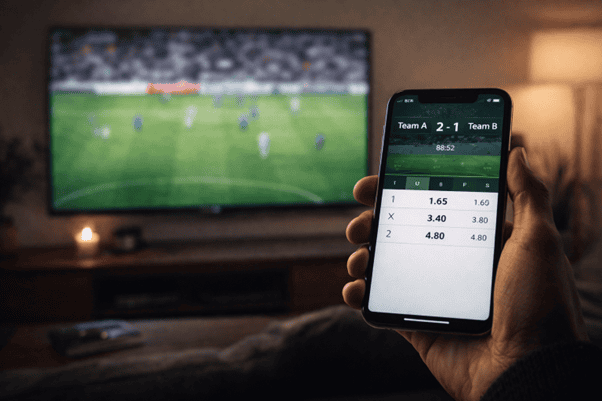
The shift is no longer theoretical. On March 1, 2026, Arsenal beat Chelsea 2-1 at the Emirates, and that sort of match now lives on more than one screen in Nigeria: a live stream on one phone, odds on another tab, and a wallet or bet slip ready when a red card or late set piece changes the price.
The phone won. Official operator pages and app stores now frame betting as a mobile routine first, not a kiosk habit carried online after the fact.
The rules changed before the interfaces did
Nigeria’s regulatory landscape is no longer built around a single center. This day’s reporting on the 2024 Supreme Court judgment says lotteries and gaming were affirmed as matters within the legislative competence of the states, and later reporting describes the result as a patchwork of state-led oversight after the decline of the old federal model.
Lagos is the clearest example on the record: the Lagos State Lotteries and Gaming Authority says online sports betting must be licensed before operation, notes that the activity has moved from the “traditional four walls of a betting kiosk” to web and mobile channels, and states that the license runs for one year and is renewable annually.
The network got big enough to carry the habit
The technology case is simple and measurable. An NCC consultation paper published in February 2026 says Nigeria had 177,426,286 subscribers, 144,787,281 internet subscriptions, and a teledensity of 84.82%, which is enough scale to explain why betting products now think in thumb zones, not desktop layouts.
On the money side, the Central Bank’s Payments System Vision 2025 is built around stronger electronic payments, while NIBSS says its Instant Payment system enables online real-time EFT across all electronic channels; the CBN’s own figures for January to June 2024 show 3.49 billion mobile app transfers and 252.1 million USSD transfers. The infrastructure did not create betting demand, but it made constant access normal.
The sportsbook and casino now share the same corridor
The menus tell the story before the branding does. LSLGA’s licensing pages separate Online Sports Betting License and Online Casino License, while its licensed-operators list shows a long row of brands approved in both categories.

The same handset that opens a football coupon at 4:30 p.m. now often opens online casinos after the final whistle, using the same wallet session and account logic. Official betPawa Android pages already group Sports, Live, Casino, Virtuals, and Aviator under a single top navigation, which says a lot about how the products expect users to move through the night.
Live data became the product, not the add-on
Modern Nigerian betting apps are judged by speed, but not solely by speed. Google Play copy for betPawa says users can bet on thousands of matches each week across favorite competitions, with markets for result, scorers, scoreline, goals, points, and more, while the same listing says virtual sports now run 66 matches every five minutes and more than 19,000 a day.
That matters because live betting is now closer to a data habit than a hunch habit: one glance at a scoreline, one price change after a corner, one quick check of virtuals when the live football ends. A user watching UFC London on March 21, when Movsar Evloev beat Lerone Murphy by majority decision at The O2, or the Australian Grand Prix on March 8, when George Russell finished 2.974 seconds ahead of Kimi Antonelli, is using the same logic across different sports: refresh, compare, stake, move on. Speed matters.
The mobile solution is getting lighter, not louder
By 2026, the better products are often the smaller ones. betPawa’s official Android page says the download is 1.85MB, runs on Android 5.0 or higher, offers auto-login, uses less data than the site, and pushes notifications for new offers; pawaTech, the company behind the broader platform, says its sportsbook stack is designed for emerging markets with speed, low data costs, and wallet transactions peaking at more than 1,800 per second.

That is why betpawa app fits the Nigerian pattern better than a bloated desktop clone: it respects patchy connections, short sessions, and the need to get from kickoff to cash-out without wasting taps. The best mobile betting products in Nigeria now behave less like mini-websites and more like tools built for transport, weak signal, and fast decisions.
What the market looks like from here
The development of sports betting in Nigeria is easier to read from the margins than from the slogans.
State regulators now publish category-based licenses, telecom numbers show a market with mass internet reach, payment rails move funds in real time, and mobile apps are being engineered around lighter downloads, faster wallets, and cross-vertical menus that keep sports, virtuals, and casino within one flow.
The older model of a stand-alone betting shop has not vanished, but the growth edge is elsewhere now: in the phone, in the wallet, and in the software that keeps both of them stable when a match swings late.
For readers comparing platforms, the practical test is still a hard one: check the state license, test the app on a real event, and judge it on login speed, payment flow, and market clarity rather than on advertising language.