

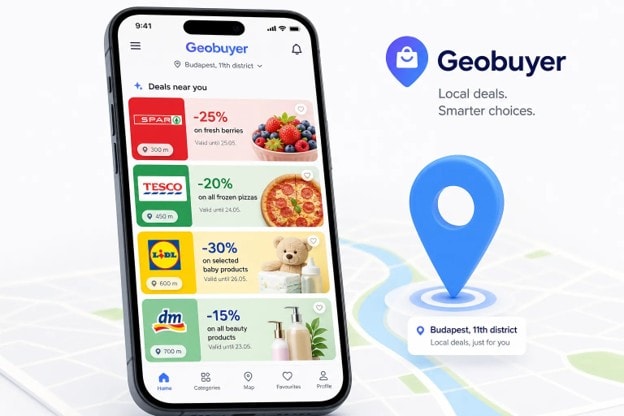

Mobile-first shopping habits have opened the door to a category of apps that didn’t really exist a decade ago: tools built specifically to help people find and compare ongoing retail promotions, rather than a specific product. As smartphone penetration keeps growing across emerging markets, this category is becoming a normal part of how people plan everyday purchases.
Why deal-aggregator apps are growing globally
Retailers everywhere run promotional cycles — weekly discounts, seasonal clearances, loyalty offers — but they typically communicate these through their own separate channels: an in-store flyer, a branded app, a loyalty-program notification.
For a shopper who wants to compare more than one retailer at once, this means juggling several apps or checking several physical flyers, which most people simply don’t do consistently.
Deal-aggregator apps exist to close that gap. Instead of building yet another single-retailer promotional channel, they pull together offers from multiple retailers into one place, so a shopper gets a fuller picture of what’s currently available without needing an account or relationship with every individual store.
This growth trend tracks closely with mobile adoption more broadly: as more of a population carries a smartphone capable of running a lightweight app, the addressable audience for this kind of tool expands, and the cost of reaching that audience drops compared to older, print-based promotional formats.
How they work
The mechanics behind these apps vary somewhat by market and by what kind of promotions they track, but the shared foundation is straightforward: the app collects current promotional content from participating retailers — this might be a digital version of a printed catalog, a structured feed of active discounts, or both — and presents it in one browsable interface, typically organized by store, category, or location.
Location-awareness is a common feature, since a promotion is only useful if the shopper can actually reach the store offering it. Many of these apps also update on a fixed cycle tied to how often retailers refresh their own promotions, rather than in real time, which keeps the format predictable for users who check it as part of a weekly routine.

This predictability is itself part of the value: a shopper doesn’t need to check constantly, just at a point in the week when new offers are known to appear.
Examples from different markets
The specific apps and the exact retailers they cover differ from country to country, since the model depends on which chains operate locally and how those chains structure their promotions. In Hungary, for instance, an app called GeoBuyer app follows this pattern, aggregating the weekly catalogs of major chains such as Lidl, Aldi, and Tesco into a single, free, registration-free interface.
What’s notable is that this isn’t an isolated case — comparable tools have emerged independently in multiple regions, each adapted to local retail structures rather than copied from a single template.
This points to the underlying demand being genuinely widespread: wherever retail competition includes promotional pricing, some version of this aggregation model tends to appear to help shoppers navigate it.

What shoppers gain
The core benefit is time savings rather than a dramatically different way of shopping. A shopper who would otherwise check two or three retailer apps before a weekly shopping trip can instead get a consolidated view in one place, reducing the friction involved in comparing options before deciding where to buy.
This is most valuable for recurring, planned purchases — groceries, household staples, items bought on a predictable schedule — where even a modest, consistent price difference between retailers adds up over months. It matters less for occasional or impulse purchases, where a shopper is unlikely to have compared retailers in the first place regardless of what tools were available.
There’s also a broader access angle worth noting: for shoppers on tighter budgets, having an easy way to see where a needed item is currently cheapest can make a meaningful practical difference, without requiring any special financial literacy or extra effort beyond checking an app that’s already part of their routine.
This matters especially in markets where retail margins are thin and even small, consistent savings on staple goods can add up to a noticeable difference in a household’s monthly spending.
A secondary benefit: discovery
A secondary, less obvious benefit is discovery: because these apps surface active promotions across multiple retailers rather than just the one a shopper already frequents, they occasionally reveal a better-priced option at a store the shopper wouldn’t have checked otherwise. Over time, this can gradually shift where someone shops, not through advertising, but simply through visibility.
Frequently asked questions
What is a deal-aggregator app?
An app that collects current promotional offers or catalogs from multiple retailers into a single interface, so shoppers can compare them without checking each retailer separately.
Are these apps free to use?
Most, including the examples mentioned here, are designed for free, registration-free use, since the goal is quick access rather than building a paid membership base.
Is this type of app common only in specific regions?
No — similar tools have appeared independently in various markets, each shaped by the retail chains and shopping habits relevant to that region.
How often is the content in these apps updated?
Typically on a fixed cycle that mirrors how often the underlying retailers refresh their own promotions, often weekly, rather than continuously in real time.
Summary
Deal-aggregator apps reflect a straightforward response to a common retail problem: promotions are everywhere, but they’re scattered across separate, retailer-specific channels. By consolidating this information into a single, mobile-friendly interface, these tools give shoppers a faster way to plan purchases around current offers — a pattern that keeps reappearing across markets as smartphone adoption grows and shopping habits shift toward digital-first planning. As more retailers compete on visible, time-limited promotions, the demand for a single place to track them all is likely to keep growing rather than fade.