
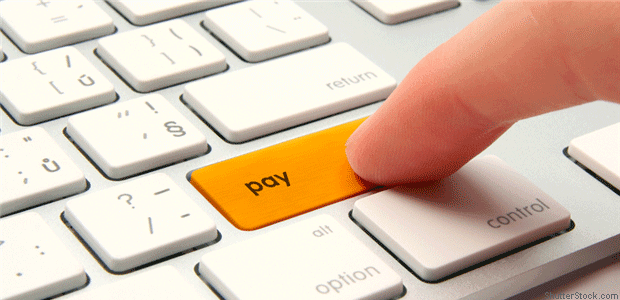

Electronic payment has come a long way in Nigeria, but it still struggles to compete with Nigerians’ love for cash. Nigerians love their cash so much that most transactions in the country are done with cash. Cash remains the preferred payment method in the country. Poor awareness of e-payment solutions, ignorance, a weak banking culture, lack of trust, illiteracy, and a love of the status quo have been blamed for the high volume of cash transactions in Nigeria.
Join us after the break for more on e-payment in Nigeria.
For many years, cheques were the only option to cash in the economy. However, merchants were hesitant to accept cheques because of corruption and mistrust.
The high incidence of bounced cheques made merchants cautious about accepting them. This was also because there was no electronic means of verifying valid cheques. Poor interconnection among banks and the lack of an electronic cheque clearing system also contributed to the problem.
However, banks are now interconnected through their branches. The Central Bank of Nigeria (CBN) has also introduced an interbank electronic cheque clearing system, which has greatly reduced the time it takes to verify and redeem cheques. Despite these developments, the fate of paper cheques in the economy seems sealed.
For any payment system to replace cash (or at least compete with it), it must earn merchants’ trust.
For this to happen, merchants must be able to verify the validity of the purchase. The payment solution must also be easily convertible to cash, or as good as cash, since many merchants in Nigeria operate on a subsistence basis.

Merchants must be able to use the money they earn that day to buy what they need for the day or the following day.
This is where e-payment or e-transaction solutions come in. These payment solutions address most of merchants’ concerns and more. However, despite their advantages, e-payment solutions have not gained much ground.
However, we hope the CBN’s efforts to make Nigeria a cashless or cash-lite economy will succeed. Central to this is introducing a daily deposit/withdrawal limit and focusing on e-payment solutions like mobile money and debit cards.
ATM leads to more Cash
The Automated Teller Machine (ATM) is the most popular e-transaction solution in Nigeria. ATMs are popular because they are convenient. With an ATM, it is much easier to withdraw money or check an account balance.

However, despite their popularity, ATMs have done little to reduce the amount of cash in the economy. This is because most Nigerians use ATM only for cash withdrawal.
Although ATMs can also perform functions like fund/cash transfers, mobile phone credit recharge, and bill payment, cash withdrawals and balance inquiries remain the most popular applications among users in Nigeria.
This is largely due to ignorance, technophobia, and the absence of merchant support.
InterSwitch, Visa, MasterCard, ETranzact, and QuickTeller are some of the leaders in ATM deployment in Nigeria. Today, InterSwitch connects all banks in the country to its network.
This makes it possible to use their cards at bank branches nationwide and in almost all machines. Different ATM service providers are also interconnected, so you don’t need to worry about which company services a particular ATM.
InterSwitch, for example, supports Visa and MasterCard on its ATM machines and vice versa.
Because ATM machines are mainly used for cash withdrawals, they do not go far enough in turning Nigeria into a cashless economy.
ATMs only make more cash available in the economy because depositors can withdraw cash so easily. To make Nigeria cashless, we need more than ATM cards; we need POS Machines and mobile money solutions.
Debit cards and e-wallets are key
While ATM cards make cash withdrawal convenient (thereby contributing to the problem), Credit cards, Debit cards, and e-wallets (like mobile money) make cashless shopping a lot more convenient.
Hence, to turn the country into a cashless economy, the drive should be towards credit cards, e-wallets, and debit cards.
While ATM cards require ATM machines to operate, Credit and debit cards require a point-of-sale (POS) terminal. However, most debit and credit cards today can also function as ATM cards.
POS terminals are located at accredited retail shops (merchants) such as supermarkets and retail stores. These merchants accept credit and debit cards as means of payment by customers.
Credit and Debit cards like Visa, Interswitch, and MasterCard can also be used to make purchases from merchants online.
Most ATM cards in Nigeria, like Interswitch, can also be used as Debit cards, and vice versa.
Interswitch and Unified Payments are leaders in e-payment solutions in the country.
Interswitch ATM cards are supported by all banks in Nigeria. Interswitch ATM/Debit cards also allow cardholders to shop online with merchants in the country.
It is a chip-and-PIN card that, in addition to being used at POS terminals for electronic payment, can also be used to buy from local merchants online. It can serve as either a credit or debit card and can also be used to withdraw cash at ATMs.
Some state governments have introduced e-payment solutions for vehicle licensing and revenue collection. More states should emulate this to deepen the electronic payment culture.
However, a worrying trend is emerging in electronic payments in Nigeria. This is the shift toward a single-transaction, PIN-based card. Many merchants in the country now offer electronic payment solutions that can only be used in their locations.
For example, examination bodies like NECO, WAEC, and JAMB all have electronic payment scratch cards that can only be used to register for exams and check results.
This means an average SSS3 graduate must buy at least one scratch card for each examination body, for a total of three cards. Even universities are now issuing their own scratch cards.
The Power Holding Company of Nigeria (PHCN) also introduced an electronic chip card for electricity payments. Like all one-transaction payment cards, the PHCN chip card can be used only to pay electricity bills.
One-transaction payment cards will make no sense in terms of any advantage that e-payment solutions have over cash. Imagine what will happen if more one-transaction cards come into the economy. This may result in an average Nigerian carrying up to 10 different cards. Imagine that.
This makes it essential to promote and deploy multi-service solutions. There is no reason one cannot use a multi-transaction card like Visa, Interswitch, or MasterCard to register for NECO, WAEC, and JAMB. Nothing stops these cards from being used to recharge the PHCN prepayment meter.
Multi-payment service solution companies like Interswitch, Quickteller, and Remita should engage with these merchants and others still considering one-transaction or one-service payment solutions to educate them on the advantages of their systems.
They should also make these cards easier to get to put as many in consumers’ hands as possible.
Despite the availability of electronic payment solutions, cash remains dominant. This is because not enough POS terminals are deployed.
To get people to use credit or debit cards, merchants must accept them. POS terminals are now available at supermarkets, shops, restaurants, fast-food joints, filling stations, hotels, and other places. However, many smaller retailers and service providers have not yet upgraded to POS.
Citizens (merchants and cardholders) also need education on the benefits of electronic payment. They also need education on how to use ATMs and debit and credit cards to reduce fear of these technologies. Electronic transaction security education should be intensified to protect cardholders.
More e-payment articles:
- How to Start a Blog
- Electronic payment: PIN security basics
- Mobile Banking in Nigeria
- Mobile Money Electronic Wallet in Nigeria
- MTN Mobile Money
- PocketMoni e-payment wallet
- Stopping one transaction scratch cards
- InterSwitch e-payment solution
- Best Web Hosting
- Internet and Electronic Banking in Nigeria