

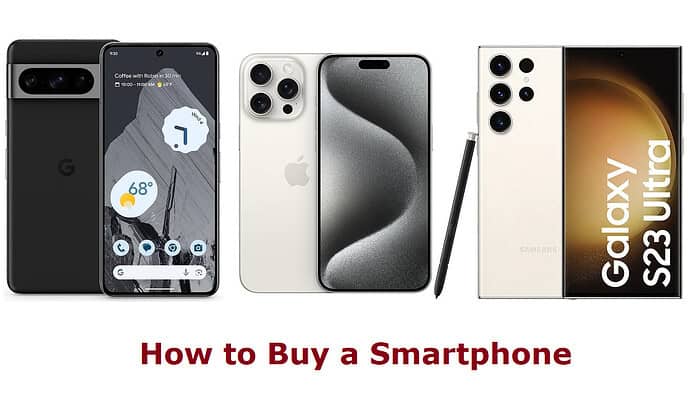

With an assortment of smartphones in the market today, narrowing your choice to one is not easy. This guide will help you buy a smartphone in Nigeria, across Africa, and in similar emerging markets. Since many people are buying their first smartphone in such markets, this guide will also help you identify one.
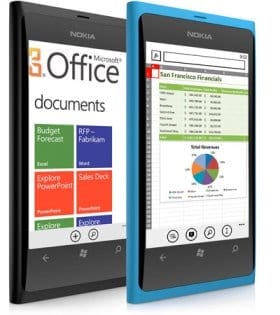
What is a Smartphone?
These days, a smartphone is simply a mobile phone that runs on Android or iOS. So, your iPhone and Android phones are smartphones.
However, a smartphone is a mobile phone that offers the computing capability of a computer. Its major distinguishing factor is that it supports third-party apps that extend the phone’s functionality beyond the manufacturer’s offering, and it comes with sensors and AI capabilities that enable it to do some cool stuff.
Multitasking or pseudo-multitasking, that is, the ability to run multiple applications at the same time (for example, you can be surfing the net on your browser while still receiving email and/or social updates), is also considered a key smartphone feature.
The easiest way to identify a smartphone is by the operating system it runs. In general mobile phones that run the following operating systems are regarded as smartphones: Android, iOS (for iPhone), Windows 10 Mobile, BlackBerry, Windows Mobile, Windows Phone, Asha Touch, Asha Software Platform, Nokia X (a spinoff of Android), Amazon Fire OS (a spinoff of Android), Firefox OS, Symbian, Maemo, Palm, WebOS, MeeGo, Linux, and Bada.
However, most of these operating systems are no longer available on new smartphones. Android and iOS are the predominant OS available on the latest smartphones.

Now that we can identify a smartphone, let us go and buy one.
What is the Performance: Processor and RAM
Performance is probably the first thing you should consider when buying a smartphone. You want to be sure the smartphone has enough power and speed to run smoothly for your intended use.
The processor (a.k.a CPU, chipset, or SoC) and the RAM are the two components that determine how smoothly and seamlessly your smartphone runs. These two components combine to form the brain of your smartphone.
So, it is a good idea to know the processor running on the smartphone you want to buy. The popular brands in the segment are Mediatek and Qualcomm.

A few vendors now design some or all of their chipsets in-house. For example, Samsung also offers Exynos chipsets in some of its phones; Apple has the A-series chipsets; Google has the Tensor G-series chipsets; and Huawei offers the Kirin series chipsets.
By just looking at the chipset running on your smartphone, you can determine whether it is high-end, mid-range, or entry-level, as chipmakers target each processor to a segment of the market.
For example, Qualcomm Snapdragon 8 Elite Gen 5 is the latest offering from Qualcomm for high-end devices. You can find it in smartphones like the Samsung Galaxy S26 and Xiaomi 17.
Exynos 2600 and Kirin 9030 Pro are the latest chipsets from Samsung and Huawei, respectively, for high-end devices. Apple offers the A19 Pro in all its top-of-the-line iPhones: the iPhone Air, iPhone 17 Pro, and iPhone 17 Pro Max. The MediaTek Dimensity 9500 is MediaTek’s top-of-the-line chipset found in models like the Xiaomi 17T Pro, Poco X8 Pro Max, Vivo X300, and the Oppo Find X9.
Don’t get carried away by the number of processor cores advertised. The processor’s grade is crucial to determining the smartphone’s overall performance. Hence, a grade A hexacore chipset targeted at high-end models can outperform a grade C octa-core chipset targeted at mid-range or entry-level devices.
This is because other factors, such as the processor’s clock speed and overall efficiency due to more advanced process technology, can affect its performance. For example, a chipset built on 2nm technology will outperform one built with 4nm technology.
MediaTek is popular among mid-range and entry-level phones and seems to be seen as inferior to Qualcomm’s offerings. Some new chipsets from Mediatek include the Mediatek Helio G100 Ultimate, MediaTek Dimensity 8400, MediaTek Dimensity 8350, MediaTek Dimensity 8300, and MediaTek Dimensity 7400. Qualcomm is also not left out with the Qualcomm Snapdragon 7 Gen 4 series, popular with a number of new mid-range 5G phones.
Samsung offers Exynos 1680 in the Galaxy A57 and Exynos 1480 in the Galaxy A37.
RAM (Random Access Memory) is the memory your smartphone uses to run active apps and the operating system, and to store their data at runtime. The more of it you have, the better.
A large RAM means you can run multiple apps smoothly, greatly improving your multitasking experience. This means you can have multiple apps running in the background while opening a new one, and your smartphone will still run fast and smoothly.
However, don’t get carried away by the nominal RAM quoted by manufacturers when you buy a smartphone. This is because size is not the only factor that influences a RAM’s performance contribution.
Like processors, RAM has different grades. 6GB of RAM on a high-end smartphone will probably be of higher quality than that offered in a mid-range phone. So, do not expect the same performance.
This is because a grade A RAM will have faster read and write speeds, which means the processor can read and write data faster, ensuring a faster, smoother experience.
4GB to 8GB RAM is a good choice, though if your budget is low, 2GB to 3GB RAM will be manageable. Gaming phones and high-productivity phones may offer 12GB to 24GB of RAM.
You can also check out the Best Black Friday Phone Deals.
What is the Battery Life?
The stamina of the battery is one of the key factors to consider when you want to buy a smartphone. Battery performance is part of a smartphone’s overall performance, but we chose to discuss it separately rather than lump it into the performance section.
Even with the best processor and RAM, if the battery life is not decent, the overall user experience of a smartphone will be abysmal. This is why you need to pay attention to this feature.
A 4000 mAh battery is a good place to start these days. However, don’t get carried away by the quoted nominal value. This is because battery capacity is just one of the variables that affect battery performance.
A battery that offers 12 to 18 hours of battery life for average use is a good buy. However, note that battery life will be affected by the tasks you conduct with your phone. So, playing games and streaming videos will drain your battery faster than just playing music or making and receiving voice calls.
What Brand, Operating System, or UI Skin?
In emerging markets, buyers usually consider the brand as the most important consideration when buying mobile phones. People prefer buying from established and trusted brands like Samsung, Xiaomi, Apple, Tecno, Infinix, itel, Vivo, Umidigi, Oppo, Oneplus, Google, and Nokia.
However, when buying a smartphone, the operating system is also important, though its importance has reduced with fewer operating systems to choose from.
Historically, there were many operating systems to choose from. However, these days you have only two to choose from. To make things even simpler, iOS is available only on Apple smartphones, while other smartphones run on Android.
There was a time when some manufacturers built smartphones for multiple platforms, like Nokia, which built for Symbian, MeeGo, Asha Touch, Asha Software Platform, Windows Phone, and the Android-based Nokia X.
So then, buying a Nokia phone was not that simple; you also had to decide on the operating system. Those days are now gone as you do not have so many operating system options.
These days, the importance of the operating system has been overshadowed by the UI, especially on Android smartphones.
Since manufacturers of Android phones all use the same operating system, their only way to distinguish themselves is to create their own user experience by customizing the User Interface.
While some manufacturers use stock Android (pure Android), most of the top brands like Samsung, Huawei, Xiaomi, OnePlus, Oppo, Tecno, itel, and Infinix have their customized UI skin.
In Nigeria and Africa generally, Android is the most popular operating system, with 83.19% market share, while iOS taking 16.74% according to a StatCounter report.
Historically, there used to be other options like BlackBerry, Windows, and Nokia Asha.
Asha Touch and Asha Software Platform were aimed at entry-level consumers seeking low-cost smartphones. Windows Phone/Windows 10 Mobile and Android served smartphones across all market segments, from entry-level buyers looking for affordable introductory smartphones to those seeking mid-range and high-end models.
BlackBerry phones were targeted mainly at mid-range and high-end segments. iOS for iPhones is targeted mostly at the high-end segment, making them more of aspirational devices for consumers in Nigeria and across Africa. This has created a market for used iPhones in Nigeria and most of Africa.
These days, used and refurbished iPhones selling for as little as 500,000 Naira have helped increase the popularity of iOS devices in Nigeria, across Africa, and in other emerging markets.
Android Smartphones are very popular because they are not only affordable and reliable but also highly customizable. This makes them the most popular smartphones in Africa, thanks to cheap Android phones from brands like itel, Infinix, and Tecno.
Here are Smartphone OS and Platforms with the brands that build on them.
- Android: Samsung, Huawei, Xiaomi, Oppo, Vivo, Umidigi, Motorola, Lenovo, LG, Infinix, Tecno, Nokia, OnePlus, Sony, HTC, Alcatel OneTouch, itel, Meizu, Gionee
- iOS: Apple (iPhone)
- Windows Phone/Windows 10 Mobile: Microsoft, Samsung, Alcatel OneTouch, Acer
- BlackBerry: RIM (BlackBerry)
- Asha Touch: Nokia
- Asha Software Platform: Nokia
- Symbian: Nokia
- Bada: Samsung
- MeeGo: Nokia
Note that many of these operating systems are no longer available on new smartphones and were included only for historical value.
Is it Upgradeable and for how long?
Smartphones are like computers; new features can be added by upgrading their software. However, to upgrade software, the hardware must be able to support it.
That is why it is a good idea to buy recently released smartphones rather than older ones. This ensures that the smartphone will support future updates and the ever-growing list of new smartphone features.
A smartphone released three years ago will have outdated hardware, limiting its ability to support future updates and features.
So, when buying smartphones, always go for the recent ones. With the ever-increasing pace of innovation in the smartphone market, a smartphone released more than 36 months ago is a bad buy today, unless you are only interested in a bargain.
However, there are manufacturers reputed for not offering software updates even when the hardware can support it. Brands like Infinix, itel, and Tecno, as well as many entry-level Android phones, have this problem, though they are now offering updates for their latest phones, especially their flagships.
However, this trend is shifting. For example, Infinix is offering three years of major Android upgrades and five years of security patches for the Hot 70. Samsung is doing better with entry-level models like the Galaxy A17 and Galaxy A07, which offer six years of major Android upgrades.
Apple, Samsung, Google, OnePlus, and a few other brands usually offer updates, though some do this faster than others. Samsung, Google, and Apple currently offer between six and seven years of major OS upgrades and security support for their latest flagship.
What Display Type and Size?
6-inch and above with 16:9 or 20:9 aspect ratio (or something in between) appears to be the best option these days. These phones offer the best real estate for browsing the web, streaming, gaming, and watching movies on your smartphone.
However, it is not just the size that matters; the type of display is also important. OLED displays (OLED, AMOLED, Super AMOLED) offer a great viewing experience with superior contrast and deeper blacks. They are also more efficient, hence using less battery.
However, you will not find OLED in entry-level devices or most mid-range devices. At these budget levels, you will only find TFT and IPS LCD displays. TFT is offered on the cheapest models, while some entry-level and most mid-range smartphones tend to offer IPS.
The display resolution is another key consideration before you buy a smartphone. You have HD, HD+, Full HD, and Quad HD to choose from. Any resolution that offers a pixel per inch (ppi) of at least 267 ppi will look decent to the eye. For the best viewing experience, 320 ppi is a good starting point.
The higher the PPI, the better. However, this will depend on the display type, color reproduction, and screen brightness. So, more expensive models from brands like Apple and Samsung tend to offer a great viewing experience.
What about the Camera?
Most smartphones now offer multiple cameras on the back. Three- and four-camera setups are now common on high-end devices, while only the cheapest smartphones offer a single rear camera.
However, don’t get carried away by the number of cameras or the raw capacity of the sensors. What really matters is how the cameras work together to deliver a great photograph or video, as well as the built-in image and video editing software provided by the manufacturer.
The AI features and filters available on the device can also be a plus. A camera setting that works for beginners who just want a simple point-and-shoot camera, as well as intermediate and advanced users who want more fine-grained controls, is also a plus.
What is the Storage Space?
64GB of built-in storage is a good place to start these days. However, if you are buying an entry level smartphone 64GB may not be an option. Your budget may simply be good enough for 16GB or 32GB storage.
If your budget allows, and depending on the smartphone, you can also find models with 128GB, 256GB, 512GB, 1TB, or 2 TB storage.
Another thing to consider when you buy a smartphone is whether the storage can be expanded with a microSD card and, if so, by how much. This will let you know the smartphone’s overall storage capacity.
However, some smartphones do not support a memory card; in such cases, you will need to buy the model with the largest built-in storage your budget allows.
You can also buy external storage for your smartphone, like the SanDisk Ultra Dual Drive USB Type C and SanDisk Ultra Dual Drive m3.0 for Android phones, and SanDisk iXpand and SanDisk iXpand Mini for iPhone.
5G, 4G, or 3G?
A 4G phone is a good place to start these days. However, if your budget cannot buy a 4G smartphone, a 3G smartphone is a manageable choice, but expect a sometimes frustrating browsing or internet experience.
If your budget allows, you should consider a 5G phone. However, note that 5G is not yet widespread in Nigeria or across Africa. So, if you must buy a 5G phone in Nigeria or any country in Africa or an emerging market, make sure 5G coverage is available in the region where you will be using it.
Manufacturer Support and Repair
Smartphones, like all electronic gadgets, may develop faults, so you need to buy one from a manufacturer with a physical presence in your country or a good network of dealers. You do not want a smartphone you will be carrying all over the city, only to find that repairers or replacement parts are not readily available.
Brands like Samsung, Infinix, Tecno, itel, Xiaomi, Oppo, and Vivo have a good network of dealerships and service centers in Nigeria. Skills for servicing or repairing smartphones built by these brands are all over the place. Parts, accessories, and enhancements for such brands are also easily accessible in Nigeria.
Make sure that whatever smartphone you choose to buy in your country, the brand has service centers there. This ensures that when anything goes wrong, you will find repair engineers to help you.
Available Apps?
The ability to run third-party apps is one of the reasons smartphones are popular. They enable you to add cool new features to your smartphone. Although platforms like iOS (iPhone) and Android boast of millions of apps, smartphone buyers in Nigeria and emerging markets need to know that lots of those apps are not developed with them in mind and may not be useful to them, except, of course, you don’t mind using a good VPN.
Platforms like Android and iOS offer many useful apps for buyers in Nigeria and other emerging markets, and many are free. Most of the essential apps are now available on both platforms.
However, if there is a specialized app you must use, it is a good idea to check whether it is available for the OS on the smartphone you intend to buy, and that the specific features you need are available in the version for that OS.
What is your Budget?
The price of a decent smartphone in Nigeria today starts at around 130,000 Naira (100 USD) in Nigeria. As expected, smartphone prices depend on a number of factors, such as available features, user experience, expected performance, and design quality.
First, define your most essential features. Then, define your budget and find a smartphone that offers as many features as possible (with an emphasis on essential features) within that budget.
However, do not compare cheap smartphones with mid-range or high-end smartphones, especially when they are of the same generation. Mid-range smartphones will usually outperform cheap smartphones, and high-end smartphones will usually outperform them all.
But just because a smartphone was high-end five years ago does not make it high-end today. So always buy newly released smartphones (less than 2 years old).
You may also be interested in:
- Best Android Phones under 90,000 Naira
- Best Android Phones under 50,000 Naira
- Android Phones under $300
- Best Android Phones under 15,000 KSh in Kenya
- Best Android Phones under 500 GHS in Ghana
Touchscreen, QWERTY Key, Slide, Flip, or Fold
Touchscreen is now a standard on most smartphones. In the early days of smartphones, there were a lot more options, with some featuring a touchscreen with no keypad, while others added a physical keypad (usually a QWERTY keyboard). There were even smartphones that did not offer a touchscreen at all at the time.
Removing physical keyboards from smartphones created more room for the display. This led to larger displays, great for browsing the web, reading documents, interacting with apps, watching videos, and gaming. Touchscreens make interacting with smartphones easier. This is probably why today most smartphones offer a touchscreen with no physical keyboard.
Smartphones with a physical QWERTY keyboard boasted easier, faster typing and were, for a while, favored by the messaging crowd. However, the software QWERTY onscreen keyboard on touchscreen phones has since matched and surpassed them.
Slide Smartphones like the old Nokia E7 offered both worlds: the largest touchscreen display possible for their size and a slide-out physical QWERTY keyboard. However, the trade-off for slide smartphones was that they may be heavier or bulkier than block and candybar smartphones.
Improvements in onscreen keyboards mean no one is talking about physical keyboards anymore. So, we do not expect a comeback of phones like the E7.
Instead, we are seeing the inclusion of additional displays in the new flip-and-fold designs from brands like Samsung, Xiaomi, and Huawei.
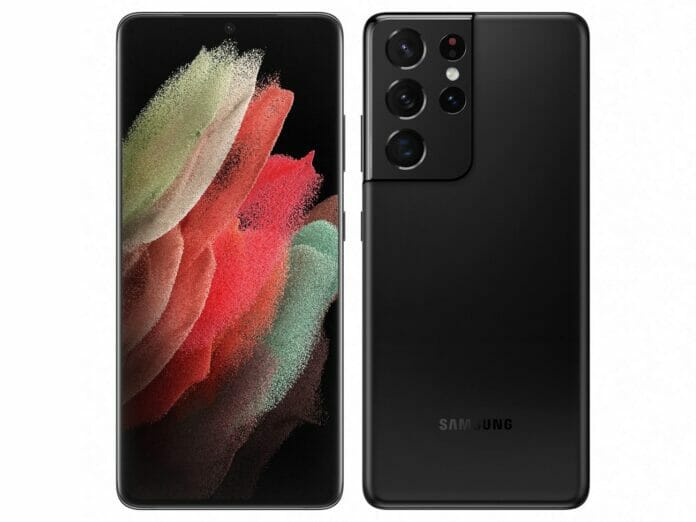
A Touchscreen phone without a keypad has more room for the display, resulting in a much larger, brighter display. This is the most popular smartphone form factor today.
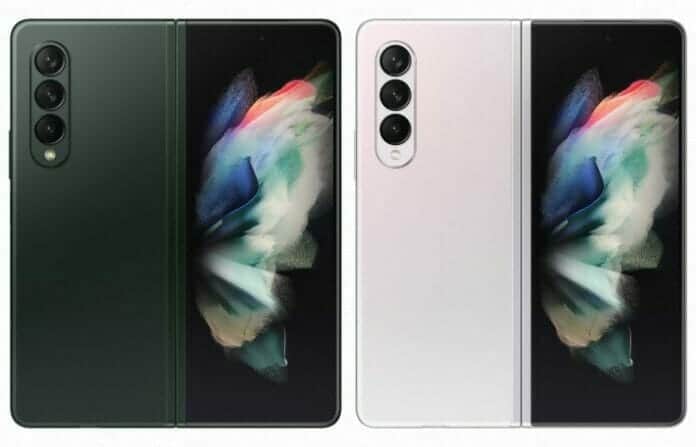
The fold design is a new smartphone form factor. It is still not popular and, so far, only available in the high-end market, which also explains why it is not popular. The Samsung Galaxy Z Fold 7 is probably the most popular. The Xiaomi Mix Fold 4 and the Google Pixel 9 Pro Fold are other popular options. The Galaxy Z TriFold is a triple-fold model from Samsung.
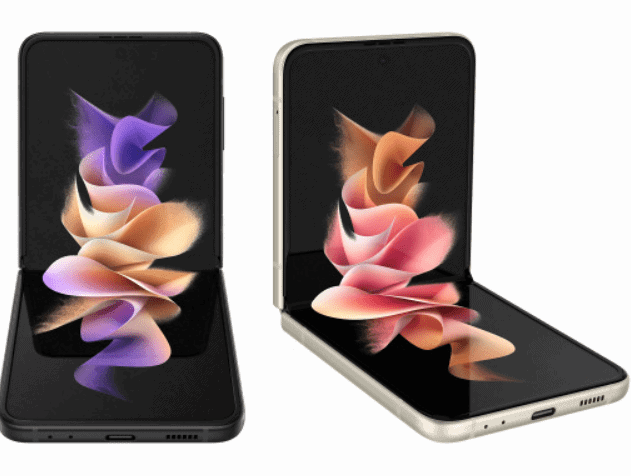
The Flip design is more or less a comeback to the past. The Samsung Galaxy Z Flip 7 and the Motorola Razr 60 Ultra are some popular examples of this design.
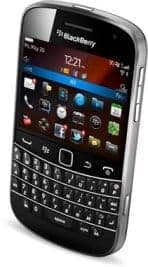
Smartphones with QWERTY keyboards are easier and faster to type with. But the physical keyboard takes up space, resulting in a smaller display compared to one without a keyboard. This design is now obsolete, as all touchscreen designs have helped improve on-screen keyboard technology, and the larger screen real estate they provide has taken over the smartphone market.
However, there are a few models, such as the Unihertz Titan 2. There are also a few physical keyboard accessories for smartphones.
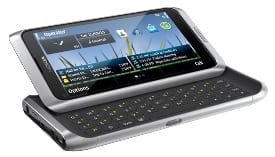
Slide smartphones offer the best of both worlds: a large touch display and an easy-to-use physical QWERTY keyboard. But they are bulkier and heavier. However, they have suffered the same fate as the models with physical and touchscreen designs, both of which are available on most smartphones.
You may also be interested in how to watch Big Brother Titans.
How to Buy a Smartphone: Buy from Authorized Shops
Buy your smartphones from authorized brands’ shops. Authorized shops deal directly with the manufacturer or a major distributor, so they offer a warranty on any smartphone you buy from them.
Tecno Phones, Infinix Phones, and itel phones from Transsion come with a warranty. Samsung Phones, Nokia Phones, as well as smartphones from Xiaomi, Oppo, and Realme all come with a warranty in Nigeria.
Most authorized dealers offer at least a 1-year warranty on mobile phones and will replace them during the warranty period. You can also buy smartphones at online stores in Nigeria.
When you buy online, you can pay online or pay when the product is delivered.
Authorized mobile phone dealers also have a return policy. A number of them will allow you to return a phone within 24 or 48 hours of buying it for replacement if it develops a fault. Buying from authorized dealers ensures you buy a genuine smartphone. You can also buy directly from a mobile network, although their phones may be locked; they are always genuine.
Other things to consider when you buy a smartphone include:
- Do you want Wireless Charging?
- What about Reverse Wireless Charging?
- Do you want Fast Charging?
- What about Fingerprint Sensor, Face Unlock, or Both?
- Is the smartphone water-resistant (IP Rating)?
- Do I need a Rugged Smartphone (IP Rating and Mil-STD Rating)?
- What about a Dedicated Memory Card Slot?
- Do I need Stereo Speakers?
- Do I need a Dual-SIM?
- What about Dual-band Wi-Fi?
- Do I need NFC?
- What about Reverse Charging?
- What Bluetooth version is supported?
Here is our guide on how to buy a smartphone. I hope you found it useful. Do you have anything to add? Please share with us on social media.
More on Mobile Phones and Smartphones
- Mobile phone shopping guide
- Dual-SIM Phones
- iPhone 16 Pro Max
- Samsung Galaxy S25 Ultra
- Infinix Hot 40
- Best iPhone
- Samsung Galaxy S25
- iPhone 14
- iPhone 13
- Best Windows 10 Mobile phones
- Microsoft Lumia phones
- Mobile Phone Prices in Nigeria
- QWERTY Keyboard Phones
- Big Brother Titans
- A guide to buying genuine mobile phones