

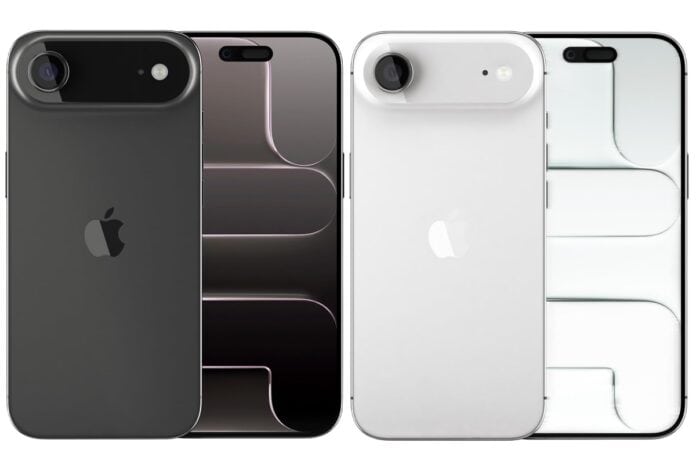

Apple debuted an entirely new category within its iPhone lineup at its September 2025 event: a device that is simultaneously the thinnest, lightest, and in many ways one of the most refined iPhones ever made. At just 5.6 mm thick and weighing a mere 165 grams, the iPhone Air is a bold statement that impeccable design and everyday usability need not be mutually exclusive.
The iPhone Air slots into Apple’s 2025 lineup between the standard iPhone 17 and the iPhone 17 Pro, starting at $999. It pairs the powerful A19 Pro chip, the same processor found in the Pro models, with a dazzling 6.5-inch Super Retina XDR ProMotion display, an all-new 48MP camera system, a titanium frame, and an upgraded 18MP front camera.
It runs iOS 26 out of the box, with Apple Intelligence deeply integrated into the experience. Compared to its closest spiritual predecessor, the iPhone 16 Plus, the Air is dramatically thinner, lighter, faster, and more feature-rich, while occupying a more distinctive niche in Apple’s portfolio.
Yet no phone is perfect. The iPhone Air makes deliberate trade-offs: it carries a single rear camera rather than a multi-lens system, and its 3,149 mAh battery is the smallest in the 2025 iPhone lineup. For some buyers, these will be deal-breakers. For many others, particularly those who prize portability, elegance, and Pro-tier performance, the iPhone Air may be the most compelling iPhone Apple has ever built.
This in-depth review covers everything you need to know about the iPhone Air, from its groundbreaking design to its pricing and availability, and how it stacks up against top Android rivals at the same price point.

Design: Thinner Than Thin, Stronger Than Expected
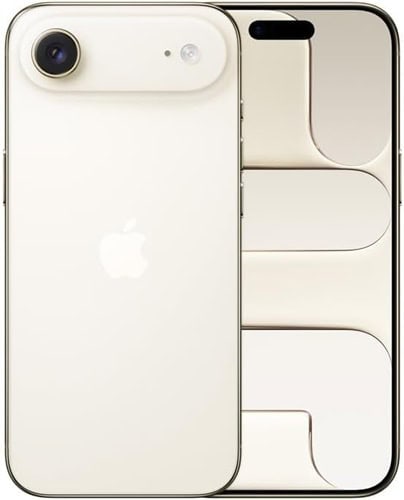
The iPhone Air’s design is, without question, its defining characteristic. At 5.6 mm, it is the thinnest iPhone Apple has ever produced, besting even the legendary iPhone 6, which measured 6.9 mm and sparked years of “too thin” debates.
Measuring 156.2 mm tall and 74.7 mm wide, the Air sits comfortably between the 6.3-inch iPhone 17 and the 6.9-inch iPhone 17 Pro Max in terms of footprint. It is 30 percent thinner and 25 percent lighter than the standard iPhone 17, a difference that is immediately apparent the moment you pick it up.

The Grade 5 titanium frame, constructed from 80 percent recycled titanium, provides the structural rigidity needed to prevent bending, a concern Apple clearly anticipated and addressed head-on. This means that despite being very thin, the iPhone Air requires significant force to deform and is not prone to bending during normal use.
Durability has been further bolstered on both the front and back. The front cover uses Ceramic Shield 2, which Apple claims offers three times better scratch resistance than previous Ceramic Shield generations, along with improved anti-reflection properties.
For the very first time, Ceramic Shield now also protects the rear of the iPhone, delivering four times better crack resistance compared to the previous back glass. The combination of titanium, Ceramic Shield 2 front, and Ceramic Shield back makes the iPhone Air arguably the most durable standard iPhone Apple has ever shipped.
The device is available in four colors: Cloud White, Light Gold, Sky Blue, and Space Black. The smartphone offers an IP68 rating, meaning it can withstand submersion in up to six meters of water for up to 30 minutes.
The Camera Control button and the customizable Action button are both present, offering hardware shortcuts that power users will appreciate. One notable omission is a second bottom-facing speaker; the Air uses a single speaker at the base, a trade-off for its thinness.
Display
The iPhone Air features a 6.5-inch Super Retina XDR OLED display with a resolution of 2736×1260 at 460 pixels per inch. That pixel density is among the highest Apple has ever shipped on a non-Pro iPhone, ensuring text, images, and video are rendered with exceptional clarity.
The panel supports ProMotion technology, delivering an adaptive refresh rate that ranges from 1 Hz when the always-on display is active to a fluid 120 Hz during active use. This is the same display technology that was previously exclusive to the iPhone Pro lineup, and its inclusion on the iPhone Air is one of the device’s most significant upgrades over prior non-Pro iPhones.
The peak outdoor brightness reaches an extraordinary 3,000 nits, the highest ever on any prior iPhone, making the Air genuinely easy to read in direct sunlight. Standard HDR content benefits from 1,600-nit peak brightness, and everyday content is handled at a comfortable base level. This makes the screen brighter than the Galaxy S25 Plus, which starts at around the same price point.
Apple also touts a twice-higher outdoor contrast ratio than previous models. The Ceramic Shield 2 front glass further reduces glare with improved anti-reflection coatings, so even in harsh lighting conditions, readability is rarely compromised.
The always-on display is a particularly welcome addition, showing the time, notifications, and lock screen widgets without requiring users to fully wake the device. At a 1 Hz refresh rate, it consumes minimal power during idle periods, a crucial consideration given the phone’s modest battery.
Camera: One Lens, Surprisingly Versatile
The camera system on the iPhone Air is one of the most debated aspects of the device. Apple made a deliberate choice to equip the Air with a single rear camera, a 48-megapixel Fusion main lens with a 26 mm focal length and an f/1.6 aperture, supported by sensor-shift optical image stabilization and 100% Focus Pixels.
While this means the Air lacks the ultrawide and periscope telephoto lenses found on the Pro models, Apple has gone to considerable lengths to make its single-camera system punch above its weight class.
The 48MP quad-pixel sensor features 1.0µm individual pixel size, enabling impressive light capture in low-light scenarios. A computational 2x optical-quality telephoto zoom is available, effectively giving users two focal lengths, 26 mm (35mm equivalent) and 52 mm, from a single physical lens.
The front camera has been significantly upgraded to an 18MP system with a square sensor that can expand its field of view or rotate between portrait and landscape orientation without physically moving the phone, the same front camera as the iPhone 17, iPhone 17 Pro, and iPhone 17 Pro Max.
This makes it especially attractive for video creators and group selfie enthusiasts. Dual-camera recording, which allows simultaneous capture from front and rear cameras, is also supported.
Photo quality is excellent, on par with the iPhone 17 Pro in many real-world scenarios. The single-lens limitation becomes apparent only in specific situations where telephoto or macro capability will be beneficial.
For most everyday shooters, however, social media content creators, travel photographers, and casual users, the iPhone Air’s camera system is more than adequate
Hardware and Software: Pro Power in the Thinnest Package
Under its sleek titanium shell, the iPhone Air is powered by the A19 Pro chip, the same silicon found in the iPhone 17 Pro and iPhone 17 Pro Max. This is a significant decision by Apple, as it places the Air firmly in the performance tier of its most capable iPhones.
The A19 Pro features a 6-core CPU, a 5-core GPU, and a 16-core Neural Engine. This translates to snappy app launches, effortless multitasking, and smooth graphics-intensive gaming.
The iPhone Air ships with 12GB of RAM, four more gigabytes than the standard iPhone 17’s 8GB, enabling more aggressive app retention, smoother multitasking, and richer on-device AI model execution.
Storage options begin at 256GB and scale up to 512GB and 1TB, ensuring the Air is available at configurations suited to both casual users and those who store large photo and video libraries on-device.
Apple Intelligence is deeply embedded in iOS 26, the operating system that the Air launches with. Features include a more capable Siri, backed by on-device and cloud processing; Writing Tools for summarizing and rewriting text across apps; Image Playground for generating custom images; and Visual Intelligence via the Camera Control button, which allows users to point the camera at objects or text to receive contextual information.
Memory Integrity Enforcement (MIE), a new hardware-and-OS memory safety technology targeting mercenary spyware, is enabled by default on the A19 and A19 Pro chips, providing meaningful protection against sophisticated cyberattacks.
iOS 26’s Liquid Glass design language refreshes the visual identity of the entire operating system, introducing translucent, frosted-glass elements throughout the UI.
For long-time iPhone users, the aesthetic update is the most significant visual overhaul since iOS 7. The iPhone Air, with its slim profile and premium materials, feels purpose-built for iOS 26’s sleek sensibility.
For users upgrading from an iPhone older than the iPhone 14 series, the software experience will feel dramatically refreshed. Apple’s commitment to software support is also a key differentiator: the iPhone Air is expected to receive iOS updates for at least five to six years, making it a sound long-term investment.
Battery life is the iPhone Air’s most contested specification. The device comes with a 3,149 mAh battery, the smallest in Apple’s 2025 iPhone lineup. Apple rates it for up to 27 hours of video playback and up to 22 hours of streaming video, figures that place it ahead of the iPhone 16 despite the smaller cell
The gains come from the efficiency of the A19 Pro chip, the Apple-designed C1X modem, and the N1 networking chip working in concert to minimize power draw.
The Air charges via USB-C and can reach 50 percent in approximately 30 minutes with a 20W or higher adapter. MagSafe wireless charging is supported at up to 25W with a compatible 30W adapter.
For users who need extended battery life, Apple offers an accessory solution: the $99 iPhone Air MagSafe Battery pack. When attached, it extends the Air’s video playback endurance to up to 40 hours and streaming endurance to up to 35 hours, figures that rival or exceed the iPhone 17 Pro Max. The trade-off, of course, is that the accessory negates much of the Air’s advantage in thickness and weight.
Connectivity: Next-Generation Networking, eSIM Only
The iPhone Air introduces Apple’s own C1X modem and N1 networking chips, the latest step in Apple’s multi-year effort to reduce reliance on third-party silicon suppliers.
The C1X modem supports 5G, Gigabit LTE, Wi-Fi 7, and VoLTE. The N1 networking chip handles Wi-Fi 7 (supporting speeds significantly beyond Wi-Fi 6E), Bluetooth 6, Thread, and Ultra Wideband.
The inclusion of Wi-Fi 7 is particularly forward-looking, offering dramatically improved throughput, lower latency, and better performance in congested wireless environments compared to the Wi-Fi 6E found in many 2024 smartphones.
One of the most significant connectivity decisions Apple made with the iPhone Air is to make it eSIM-only, with no physical SIM tray. This is notably different from the iPhone 17 lineup, which continues to offer physical SIM card support in models sold outside the United States.
The iPhone Air is the first Apple device to extend the eSIM-only model globally, a move that reflects Apple’s long-term vision for a fully digital carrier relationship but may create friction for users in regions where eSIM activation and carrier support remain limited.
Standard safety and location features are fully supported, including Emergency SOS via satellite, Messages via satellite, Crash Detection, and dual-frequency GPS. Ultra Wideband enables precise spatial awareness for features like AirDrop directional guidance, Find My precision tracking, and potential future smart home integrations.
Compared to the Samsung Galaxy S25 Plus and Google Pixel 9 Pro, both of which offer physical SIM card support, the iPhone Air’s eSIM-only approach is the more forward-thinking but potentially less universally compatible choice.
For users in markets with robust eSIM infrastructure, such as the United States, the United Kingdom, and most of Western Europe, this is not an issue. For users in parts of Africa, Southeast Asia, and other regions where carrier eSIM support is still developing, including Nigeria, it is worth verifying eSIM availability with local carriers before purchasing.
Where to Buy iPhone Air
Amazon US – See Offers | Amazon UK – See Offers | Amazon Canada – See Offers
iPhone Air Price and Availability
The iPhone Air starts at $999 for the 256GB configuration, with the 512GB and 1TB models priced higher. This positions the Air squarely between the iPhone 17 (starting at $799) and the iPhone 17 Pro (starting at $1,099).
iPhone Air price starts at $999 for the 256GB model, $1,199 for the 512GB model, and $1,399 for the 1TB model in the United States. iPhone Air price in Nigeria starts at ₦1,450,000 for the 256GB storage option, ₦1,700,000 for the 512GB storage option, ₦2,000,000 for the 1TB storage option.
Verdict
The Apple iPhone Air is not the right iPhone for everyone, but for the right buyer, it is the best iPhone Apple has ever made. Its 5.6 mm profile, titanium construction, Pro-grade A19 Pro chip, gorgeous ProMotion display, and deeply integrated Apple Intelligence features combine into a device that feels genuinely new, not merely incremental.
It is the ideal iPhone for those who have grown weary of increasingly heavy and thick smartphones; for users who shoot a lot with their front camera; for creative professionals who prioritize processing power and display quality; and for anyone who appreciates the tactile pleasure of holding something extraordinarily well-engineered.
It is less suited to users who demand multi-lens camera flexibility, all-day-and-then-some battery endurance, or physical SIM card support.
At $999, it earns its place at the top of Apple’s non-Pro lineup with conviction. The iPhone Air doesn’t just prove that thin is beautiful, it proves that thin can be brilliant.
| General | |
|---|---|
| Announced / Released | September 9, 2025 / September 19, 2025 |
| Colours | Space Black, Cloud White, Light Gold, Sky Blue |
| Design and Build | |
| Dimensions | 156.2 × 74.7 × 5.6 mm |
| Weight | 165 g |
| Build | Ceramic Shield 2 front, grade-5 titanium frame, glass back (Ceramic Shield) |
| Durability | IP68 dust and water resistant (up to 6 m, 30 min) |
| Display | |
| Type | 6.5-inch LTPO Super Retina XDR OLED, 120Hz ProMotion, HDR10, Dolby Vision |
| Resolution | 1,260 × 2,736 pixels, 19.5:9, ~460 ppi |
| Brightness | 1,000 nits (typ), 1,600 nits (HBM), 3,000 nits (peak) |
| Performance | |
| Chipset | Apple A19 Pro (3 nm) |
| CPU / GPU | Hexa-core CPU · 5-core GPU |
| RAM / Storage | 12 GB · 256 / 512 GB / 1 TB (NVMe, non-expandable) |
| Camera | |
| Main (single) | 48 MP Fusion, f/1.6, 26mm, sensor-shift OIS, 2x optical-quality zoom |
| Front | 18 MP Center Stage, f/1.9, multi-aspect |
| Video | 4K @ 24/25/30/60fps, Dolby Vision HDR |
| Battery, Software, and Connectivity | |
| Battery | 3,149 mAh, wired PD2.0 (50% in 30 min), MagSafe/Qi wireless |
| Software | iOS 26 (upgradable to iOS 26.4+) |
| Connectivity | 5G (Sub-6), Wi-Fi 6e/7, Bluetooth 6.0, USB-C 2.0, NFC, UWB |
| Security | Face ID |
| SIM | eSIM only (dual eSIM, max 2 active) |
| Price | |
| Starting price | $999 (256 GB) · $1,199 (512 GB) · $1,399 (1 TB) · ₦1,450,000 (256 GB) · ₦1,700,000 (512 GB) · ₦2,000,000 (1 TB) |