

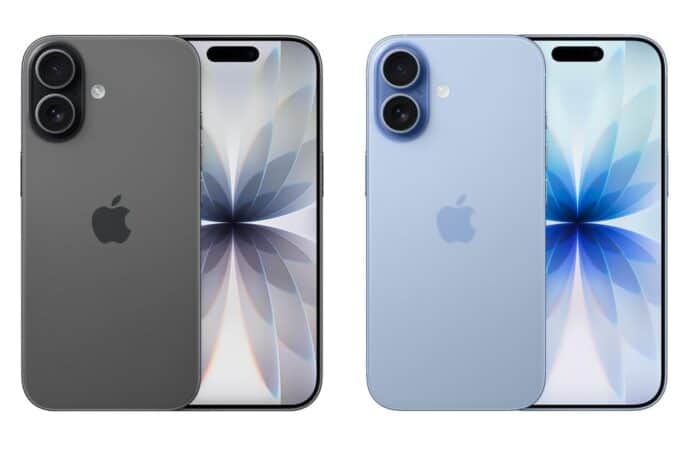

iPhone 17 is the entry-level flagship of Apple’s 2025 lineup that genuinely rivals its more expensive Pro siblings, without increasing the starting price. At $799, the iPhone 17 is the sixth consecutive generation to launch at the same price point, a remarkable feat of cost containment amid inflation and supply-chain volatility.
So what exactly does the iPhone 17 offer? For starters, it marks the first time Apple has brought ProMotion 120Hz refresh technology to the standard iPhone lineup, addressing one of the most long-standing criticisms of the base model.
The display has also grown from 6.1 inches to 6.3 inches and now boasts 3,000-nit peak outdoor brightness. Add to that a completely new 48MP Dual Fusion dual-camera system, the powerful A19 chip built on a third-generation 3nm process, a redesigned 18MP Center Stage front camera, upgraded Ceramic Shield 2 glass, and a new Apple-designed N1 wireless chip supporting Wi-Fi 7 and Bluetooth 6.0, and the value proposition becomes exceptionally compelling.

Design
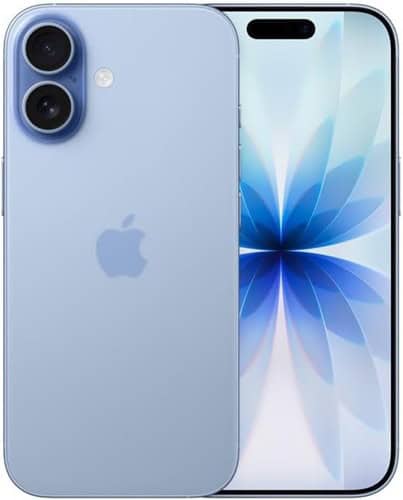
The iPhone 17 doesn’t reinvent the wheel in terms of form factor, but it refines it in ways that matter. Measuring 149.6 x 71.5 x 7.95mm and weighing 177 grams, it is slightly thicker and heavier than the iPhone 16’s 7.8mm and 170g profile, a modest trade-off for the additional battery capacity and improved thermal management it houses.
One of the standout material upgrades on the iPhone 17 is the introduction of Ceramic Shield 2 on the front glass. Apple claims this new formulation offers 3x better scratch resistance than the previous generation of Ceramic Shield, making it the toughest front glass on any smartphone currently available.
The frame itself is aluminum, consistent with Apple’s non-Pro lineup tradition, though the company has reserved the premium aluminum unibody construction seen on the iPhone 17 Pro exclusively for that model. Unfortunately, the back of the device does not benefit from Ceramic Shield, a distinction worth noting if drop protection is a primary concern for buyers.
Display
The display is arguably the single most important upgrade on the iPhone 17, and it’s one that consumers have loudly demanded for several years. Apple has equipped the iPhone 17 with a 6.3-inch LTPO Super Retina XDR OLED panel featuring a 1206 x 2622 pixels resolution and ProMotion technology with an adaptive refresh rate of up to 120Hz, the same display used on the significantly more expensive iPhone 17 Pro and iPhone 17 Pro Max.

This is not a modest specification bump; it is a quantum leap from the 60Hz display that shipped with the iPhone 16. The practical impact is immediately noticeable: scrolling is smoother, animations feel more fluid, and gaming becomes distinctly more immersive.
Peak outdoor brightness reaches 3,000 nits, representing a substantial improvement over the iPhone 16 and ensuring excellent legibility even in direct sunlight. Perhaps most impressively, the iPhone 17 supports Always-On Display functionality, another feature inherited from the Pro lineup, which keeps the time, widgets, and lock screen visible at a 1Hz refresh rate to conserve power.
The display cuts reflections by about 50% compared to its predecessor, a detail that Apple has quietly tucked into the spec sheet but that pays dividends in everyday use.
Camera
The camera system on the iPhone 17 has been significantly redesigned. The rear of the device now features what Apple calls a 48MP Dual Fusion camera system, consisting of a primary 48MP Fusion main camera and an all-new 48MP Fusion Ultra Wide camera, replacing the 12MP Ultra Wide lens that shipped on the iPhone 16.
This upgrade meaningfully improves detail capture in wide-angle shots and enables higher-resolution macro photography. The main camera also delivers optical-quality 2x telephoto capability via pixel binning, providing effective zoom without dedicated hardware.
The front-facing camera represents one of the most talked-about improvements of the entire iPhone 17 generation. Apple has replaced the standard selfie lens with an 18MP Center Stage camera that can record video up to 4K at 30fps.
Center Stage, originally a feature of the iPad, uses machine learning to keep subjects centered in the frame even as they move, making it ideal for video calls and selfie videos.
The iPhone 17 also introduces Dual Capture, a new video feature that enables simultaneous recording from both the front and rear cameras, particularly useful for content creators who want to capture both a scene and their reaction to it in a single take.
Hardware and Software
At the heart of the iPhone 17 is Apple’s A19 chip, built on a third-generation 3-nanometer process featuring a 6-core CPU and 5-core GPU. While the Pro models receive the A19 Pro variant with additional GPU cores and enhanced architecture, the standard A19 in the iPhone 17 delivers exceptional real-world performance across virtually every task a mainstream user would undertake, from photo editing and gaming to AI-powered features and multitasking. iPhone 17e features a binned variant of the A19 with a 4-core GPU.
The iPhone 17 also ships with 8GB of RAM, enabling robust on-device AI processing under Apple Intelligence. Benchmarks consistently place the A19 among the fastest mobile chips ever tested, outperforming both the Snapdragon 8 Elite inside the Galaxy S25 and the Tensor G5 in the Pixel 10 in single-core CPU tests.
The iPhone 17 ships with iOS 26, Apple’s most significant operating system redesign in years. Visually, iOS 26 introduces a new design language that dynamically reflects and refracts the content beneath it, with live-updating effects that respond to the user’s wallpaper and notifications in real time.
Practical features introduced in iOS 26 include Call Screening, which automatically answers unknown callers, requests their name and reason for calling, and only alerts the user once that information has been provided, and Hold for Me, which waits in a call queue on the user’s behalf and sends a notification when a live agent becomes available.
Apple Intelligence remains a central pillar of the iPhone 17’s software story. Writing Tools, Visual Intelligence, and Live Translation are deeply baked into the operating system and run on-device using the A19’s Neural Engine, ensuring user data never needs to leave the smartphone for most tasks.
The iPhone 17 also introduces a new 40W Dynamic Power Adapter, a substantial charging-speed upgrade over the 20W adapter that has shipped with iPhones for several years, though it must be purchased separately. It comes with a 3692 mAh battery, offering improved battery life and delivering reliable all-day endurance in real-world testing.
Connectivity
The iPhone 17 introduces Apple’s new N1 wireless chip, a custom-designed silicon solution that consolidates previously separate Wi-Fi and Bluetooth components into a single, more power-efficient package.
The N1 chip supports Wi-Fi 7 (802.11be), delivering multi-gigabit wireless speeds and significantly reduced latency compared to previous-generation Wi-Fi 6E. Bluetooth 6 is also supported, improving connection stability and range, while Thread networking support positions the iPhone 17 as a capable hub for smart home devices.
In everyday use, features like AirDrop and Personal Hotspot feel noticeably faster and more reliable thanks to the N1 chip’s architectural improvements.
5G connectivity is handled by a Qualcomm modem, supporting both sub-6GHz and mmWave frequency bands across a wide range of carriers worldwide. In markets where mmWave infrastructure is primarily available in dense urban areas of the United States, the iPhone 17 can achieve multi-gigabit downlink speeds.
For the vast majority of users on sub-6GHz networks, the phone delivers meaningfully faster speeds than LTE, particularly on mid-band spectrum. In the US and several other markets, the iPhone 17 ships without a physical SIM card tray, instead relying exclusively on eSIM technology, which allows users to store multiple carrier profiles and switch between them without physical hardware.
Wired connectivity is provided via a USB-C port, consistent with Apple’s industry-wide transition away from Lightning. However, it is worth noting that the standard iPhone 17’s USB-C port operates at USB 2.0 speeds, which are adequate for charging and basic data transfer but are notably slower than the USB 3.0 standard found in the iPhone 17 Pro.
The iPhone 17 also supports Emergency SOS via satellite, Messages via satellite, and Crash Detection, providing critical safety functionality in areas without cellular or Wi-Fi coverage. Second-generation Ultra Wideband chip support, NFC for Apple Pay, and dual-frequency GPS round out a comprehensive connectivity package that rivals anything available in its price class.
Where to Buy iPhone 17
Amazon US – See Offers | Amazon UK – See Offers | Amazon Canada – See Offers
iPhone 17 Pricing and Availability
The iPhone 17 starts at $799 (USD) for the 256GB model, a price Apple has maintained across six consecutive iPhone generations, dating back to the iPhone 12 in 2020. A 512GB configuration is available for $999.
The iPhone 17 price starts at $799 for the 256GB model and $999 for the 512GB model in the United States. iPhone 17 price in Nigeria starts at ₦1,300,000 for the 256GB storage option and ₦1,590,000 for the 512GB storage option.
You can buy the iPhone 17 in Nigeria at iStore Nigeria, iConnect, Slot, Konga, Jumia, JustFones, and Jiji. You can find the smartphone at all leading phone stores in Lagos, Abuja, Port Harcourt, Ibadan, Abeokuta, Owerri, Enugu, Kano, Kaduna, Calabar, and other major cities in Nigeria.
Verdict
The Apple iPhone 17 is, without a doubt, the best value flagship smartphone Apple has ever produced. By bringing ProMotion, doubled base storage, an upgraded dual 48MP camera system, the A19 chip, 40W charging, and Wi-Fi 7 to the $799 price point, all with no price increase, Apple has closed the gap between its standard and Pro models in ways that will matter to the vast majority of iPhone buyers. The iPhone 17 is not a modest iteration; it is a genuine generational leap for the standard iPhone lineup.
For prospective buyers currently using an iPhone 14, iPhone 13, or older models, the upgrade case is overwhelming. Even for iPhone 15 users, the jump to 120Hz ProMotion alone may justify the switch.
The phone excels in video recording, display quality, ecosystem integration, and everyday performance, while its new Center Stage front camera makes it the best selfie-capable iPhone Apple has ever shipped. Its one notable limitation, the absence of a dedicated telephoto lens, remains a differentiator that pushes buyers toward the iPhone 17 Pro if long-range photography is a priority.
| General | |
|---|---|
| Announced / Released | September 9, 2025 / September 19, 2025 |
| Predecessor | Apple iPhone 16 |
| Colours | Black, White, Mist Blue, Sage, Lavender |
| Design and Build | |
| Dimensions | 149.6 × 71.5 × 8.0 mm |
| Weight | 177 g |
| Build | Ceramic Shield 2 front, aluminum frame, glass back |
| Durability | IP68 dust and water resistant (up to 6 m, 30 min) |
| Display | |
| Type | 6.3-inch LTPO Super Retina XDR OLED, 120Hz ProMotion, HDR10, Dolby Vision |
| Resolution | 1,206 × 2,622 pixels, 19.5:9, ~460 ppi |
| Brightness | 1,000 nits (typ), 1,600 nits (HBM), 3,000 nits (peak) |
| Performance | |
| Chipset | Apple A19 (3 nm) |
| CPU / GPU | Hexa-core CPU · 5-core GPU |
| RAM / Storage | 8 GB · 256 / 512 GB (NVMe, non-expandable) |
| Camera | |
| Main (wide) | 48 MP Fusion, f/1.6, 26mm, sensor-shift OIS, 2x optical-quality zoom |
| Ultra-wide | 48 MP Fusion, f/2.2, 13mm, 120° FoV |
| Front | 18 MP Center Stage, f/1.9, multi-aspect |
| Video | 4K @ 24/25/30/60fps, Dolby Vision HDR |
| Battery, Software, and Connectivity | |
| Battery | 3,692 mAh, wired PD3.2 (50% in 20 min), MagSafe/Qi wireless |
| Software | iOS 26 (upgradable to iOS 26.3+) |
| Connectivity | 5G (Sub-6/mmWave on US model), Wi-Fi 7, Bluetooth 6.0, USB-C 2.0, NFC, UWB |
| Security | Face ID |
| SIM | Nano-SIM + eSIM (eSIM-only in USA; dual Nano-SIM in China) |
| Price | |
| Starting price | $799 (256 GB) · $999 (512 GB) at launch (MSRP) · ₦1,300,000 (256 GB) · ₦1,590,000 (512 GB) |