

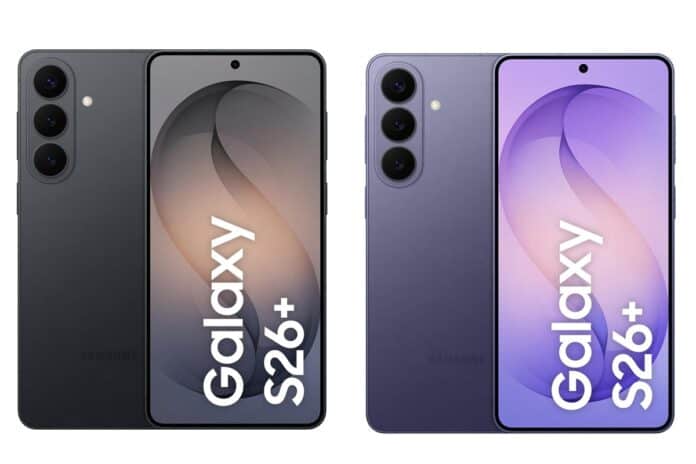

Samsung unveiled the Galaxy S26 Plus at Galaxy Unpacked on February 25, 2026, positioning it as the sweet spot in the lineup, offering a near-Ultra experience in display size, battery endurance, and Galaxy AI features without the Ultra’s premium price tag. Samsung Galaxy S26 Plus arrives with a host of improvements over its predecessor, the Galaxy S25+. The premium Android phone is powered by either the Snapdragon 8 Elite Gen 5 for Galaxy (in North America, China, and Japan) or Samsung’s own 2nm Exynos 2600 (in most other global markets), representing a meaningful generational leap in processing power and AI capability.
The most visible change is Samsung’s new ambient island camera design, which visually unifies the rear lenses into a cleaner, more premium-looking module. Samsung also highlights display improvements driven by upgraded image processing (mDNIe and ProScaler enhancements), plus a redesigned vapor chamber aimed at sustaining performance for longer gaming and multitasking sessions.
At launch, Samsung confirmed 12GB RAM with 256GB/512GB storage, a 6.7-inch QHD+ Dynamic AMOLED 2X panel with up to 120Hz adaptive refresh and 2,600 nits peak brightness, a 4,900mAh battery, and 45W wired charging capable of reaching up to 69% in ~30 minutes (with the appropriate adapter).
Samsung Galaxy S26 Plus Key Specs and Features
- 6.7 inches Dynamic LTPO AMOLED 2X Display, 1440 x 3120 pixels (~516 ppi density), 120 Hz Refresh Rate, HDR10+, 2600 nits (peak)
- Always-on Display
- Android 16, up to 7 major Android upgrades, One UI 8.5
- Galaxy AI
- Perplexity AI
- Circle to Search
- Samsung DeX
- Samsung DeX Wireless
- Qualcomm SM8850-AC Snapdragon 8 Elite Gen 5 (3 nm) Octa Core Processor or Exynos 2600 (2 nm) Deca-core Processor
- 12GB RAM
- 50 MP (wide) + 10 MP (telephoto) + 12 MP (ultrawide) Triple Rear Camera
- 12 MP (wide) Front Camera
- Fingerprint Sensor (under display, ultrasonic)
- 256GB, 512GB Built-in Storage
- Dust and Water Resistance (IP68)
- eSIM Support
- 4G LTE Support
- 5G Support
- Tri-band Wi-Fi Support
- Wi-Fi 6e and Wi-Fi 7 Support
- 45W Fast Charging Capacity
- 20W Fast Wireless Charging Capacity
- 4900 mAh Li-ion Battery
Design
The Samsung Galaxy S26 Plus maintains the design language that has defined Samsung’s flagship smartphones in recent years, but it introduces a few subtle refinements that distinguish it from the Galaxy S25 Plus. The 5G phone retains its flat front and back glass sandwich construction with an aluminum frame, an approach Samsung has favored for its non-Ultra models.

At 158.4mm tall, 75.8mm wide, and just 7.3mm thin, the S26 Plus is virtually identical in dimensions to its predecessor, and it tips the scales at 190 grams. The slim profile and balanced weight make it comfortable to hold and use for extended periods, even with its large 6.7-inch screen.
The most visible design change this year is the new translucent ambient camera island on the rear. Samsung has unified the camera lenses into a single polished module that sits flush with the back panel, creating a more refined and cohesive look compared to the individual lens rings of previous models. It is a subtle but welcome aesthetic evolution that gives the Galaxy S26 Plus its own identity within the lineup.
The phone is available in four standard colors: Black, Cobalt Violet, Sky Blue, and White, as well as two online-exclusive shades: Pink Gold and Silver Shadow. This unified color palette is shared across the entire S26 family, reinforcing the series’ cohesive design language.
In terms of durability, the Galaxy S26 Plus is reinforced with an Armor Aluminum frame and Corning Gorilla Glass Victus 2 on both the front and rear panels. It carries an IP68 rating for dust and water resistance, meaning it can withstand submersion in up to 1.5 meters of fresh water for 30 minutes.

Compared to the iPhone 17 Pro, which also switched from titanium back to aluminum this year, the Galaxy S26 Plus feels equally premium in hand, though Samsung’s flatter design philosophy contrasts with Apple’s more rounded edges. Against the OnePlus 15, which features a distinctive curved-glass design, the S26 Plus feels more traditional but arguably more refined.
It is worth noting that the Galaxy S26 Ultra sets itself apart with more rounded corners and the exclusive Privacy Display, but the S26 Plus holds its own as a beautifully crafted device.
Display
The Galaxy S26 Plus features a 6.7-inch Dynamic AMOLED 2X display with a QHD+ resolution of 3120 x 1440 pixels, and it is the sharpest screen in the entire S26 lineup, sharper, in fact, than the larger Galaxy S26 Ultra. The panel supports an adaptive refresh rate that ranges from 1Hz to 120Hz, adjusting dynamically based on on-screen content to balance smoothness with power efficiency.
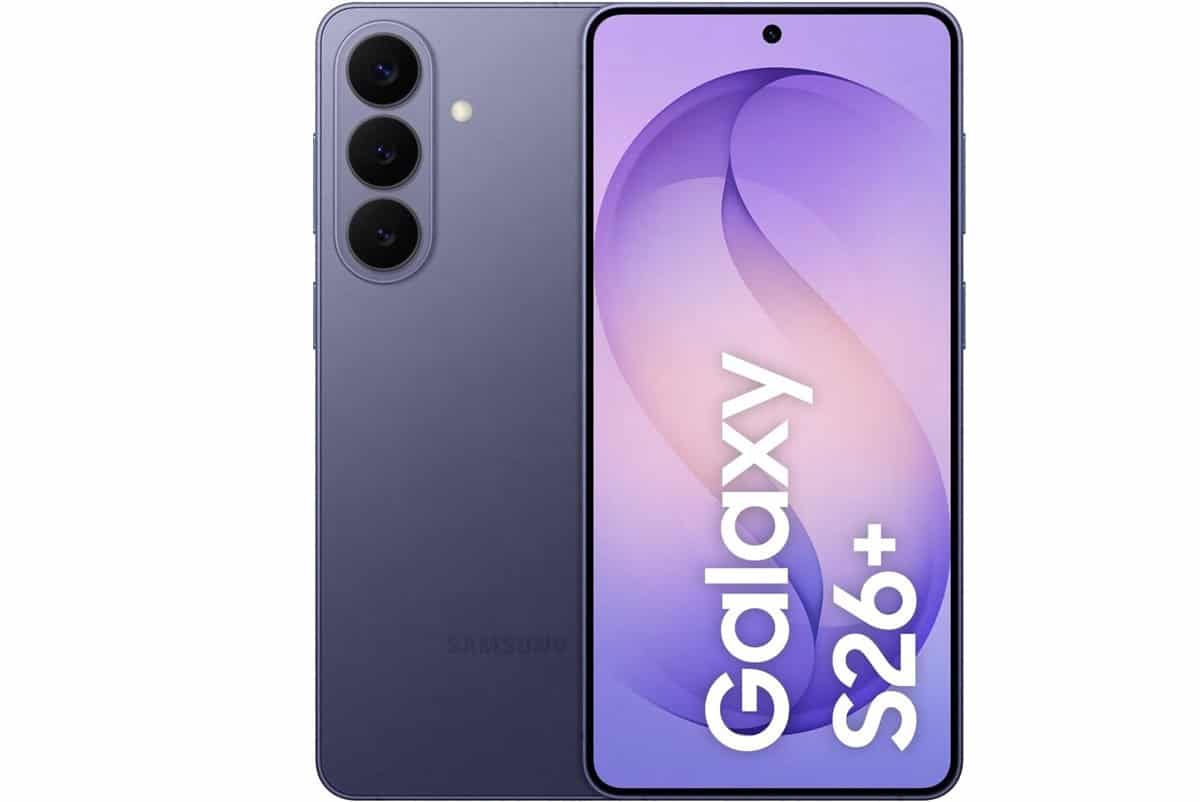
Peak brightness reaches up to 2,600 nits, ensuring excellent outdoor visibility even in direct sunlight. The display supports HDR10+ content, which makes streaming movies and shows from platforms like Netflix and YouTube look exceptionally vivid.
Samsung has also embedded its ProScaler technology into the S26 Plus, an AI-powered image enhancement engine that sharpens text and fine details while smoothing textures across all apps and content in real time.
Paired with Samsung’s updated mobile Digital Natural Image engine (mDNIe), which delivers four times better processing precision than previous generations, the display renders colors that are noticeably more subtle and lifelike. Whether you are reading long articles, editing photos, or watching high-dynamic-range video, the screen consistently delivers an immersive and accurate visual experience.
Compared to competitors, the S26 Plus’s display comfortably stands among the best in the business. The iPhone 17 Pro’s 6.3-inch ProMotion OLED panel offers slightly higher peak brightness (approximately 3,000 nits) and is renowned for its color accuracy, but it is noticeably smaller.
The Google Pixel 10 Pro offers a similarly sized AMOLED screen but does not match the S26 Plus in raw resolution. One notable omission is Privacy Display, Samsung’s new feature that narrows the viewing angle to prevent screen peeking. This groundbreaking technology is exclusive to the S26 Ultra. Still, for sheer display quality, color reproduction, and sharpness at this screen size, the Galaxy S26 Plus is hard to beat in 2026.
Cameras
The camera system on the Galaxy S26 Plus is one area where Samsung has opted for continuity rather than radical change. The rear setup consists of a 50MP primary sensor with optical image stabilization, a 12MP ultra-wide camera, and a 10MP telephoto camera with 3x optical zoom.
On the front, a 12MP wide-angle camera handles selfies and video calls. This configuration is essentially identical to the Galaxy S25 Plus and indeed traces its lineage back to the Galaxy S23 series. While some enthusiasts may be disappointed by the lack of new sensor hardware, Samsung has focused heavily on improving what these cameras can do through software and AI processing.
The biggest camera enhancements come from Samsung’s upgraded ProVisual Engine and the new Snapdragon 8 Elite Gen 5 processor (or Exynos 2600, depending on region).
Nightography, Samsung’s low-light imaging suite, has been significantly improved for video, leveraging AI-driven noise reduction that analyzes noise patterns unique to each sensor type to produce footage that looks more natural and cinematic in dark environments.
The next-generation camera system also captures a broader dynamic range, ensuring that both shadows and highlights remain clear and vivid in challenging lighting conditions.
A standout new feature is Super Steady’s Horizontal Lock, which uses expanded optical angles combined with gyro and acceleration sensors to detect the direction of gravity and keep video recordings perfectly level even if you rotate the phone a full 360 degrees.
Samsung has also introduced support for the Advanced Professional Video (APV) codec, which records at a high bitrate in a perceptually lossless format, making the S26 Plus particularly appealing to content creators who want extensive post-production flexibility.
The APV mode supports both Log and HDR capture, though users should be aware that file sizes are substantial, approximately 2GB for just 10 seconds of Log recording. Fortunately, external storage recording is supported.
On the AI front, Photo Assist now accepts written text prompts, allowing users to make complex edits using natural language. You can describe what you want changed, such as transforming a photo’s setting or adding creative elements, and Galaxy AI handles the rest.
Creative Studio has also been expanded, enabling users to generate custom stickers, profile pictures, or entirely new images from simple prompts. While the iPhone 17 Pro arguably holds an edge in video recording quality with ProRes, Dolby Vision, and spatial video support, the Galaxy S26 Plus offers more versatility in AI-powered photo editing and delivers more vibrant, social-media-ready color processing.
Hardware and Software
Under the hood, the Samsung Galaxy S26 Plus is powered by a next-generation chipset that represents one of the most significant performance leaps in recent Samsung flagship history.
In North America, China, and Japan, the Samsung phone runs the Qualcomm Snapdragon 8 Elite Gen 5 for Galaxy, while most other global markets (including parts of Europe) receive Samsung’s own Exynos 2600, notably the first 2nm smartphone processor ever shipped.
Both chips are paired with 12GB of LPDDR5X RAM and either 256GB or 512GB of UFS 4.0 storage, ensuring fast app loading, seamless multitasking, and ample room for media.
Samsung reports that the Galaxy S26 Plus delivers a 38% boost to its advanced Neural Processing Unit and 23% smoother graphics rendering compared to the S25 Plus.
In practice, this translates to faster on-device AI processing, more responsive gaming with ray tracing support, and a customized image enhancer that sharpens and smooths visuals across apps and content in real time.
Benchmark tests indicate that the Snapdragon 8 Elite Gen 5 outperforms Apple’s A19 Pro chip in many multi-core and GPU-intensive tasks, though Apple’s tighter iOS integration means the iPhone often feels more fluid in everyday interactions.
The regional chipset split remains a point of contention for some buyers, as the Exynos variant has historically trailed the Snapdragon in raw performance and efficiency. That split was widely reported in launch coverage, with Samsung’s UK site mentioning the Exynos 2600 for the Galaxy S26 and Galaxy S26+ in that market.
Samsung Galaxy S26+ features a redesigned vapor chamber that improves thermal performance (Samsung cites 29% improvement for Galaxy S26 and S26+), plus support for improved ray tracing in compatible games. For buyers who keep phones for 3–5 years, thermal behavior matters as much as peak benchmarks; heat is what makes phones throttle, dim displays, and drain faster.
The software experience is where the Galaxy S26 Plus truly shines this year. Running Android 16 with One UI 8.5, the Gaming phone introduces Samsung’s most advanced Galaxy AI to date.
Now Nudge is a context-aware feature that intelligently understands what is on your screen and surfaces helpful suggestions, such as prompting you to add a calendar event when a date is mentioned, or offering to share photos when a friend asks for them.
Now Brief delivers personalized insights throughout the day, including exercise recommendations, booking reminders, and special event notifications.
Bixby has also been substantially upgraded with natural language understanding, and the phone now integrates Perplexity as an additional AI assistant alongside Google Gemini.
Samsung’s commitment to long-term software support is another strong selling point. The Samsung Galaxy S26 Plus will receive seven major Android OS updates and up to seven years of security patches, putting it on par with Apple’s legendary update track record and well ahead of most Android competitors outside of Google’s Pixel lineup.
Additional software features include Samsung DeX for a desktop-like experience, an improved Gallery app that auto-organizes screenshots, a document scanning mode built into the stock Camera app, and Audio Eraser support that now extends to third-party applications.
Battery and Charging
The Galaxy S26 Plus houses a 4,900 mAh lithium-polymer battery, the same capacity as the Galaxy S25 Plus. While the unchanged battery size may seem underwhelming on paper, Samsung compensates with the improved power efficiency of the new processor and enhanced thermal management. Samsung claims up to 31 hours of video playback for the Galaxy S26+.
The Snapdragon 8 Elite Gen 5’s 3nm architecture (or the Exynos 2600’s 2nm process) should draw less power under typical workloads, and Samsung’s redesigned thermal system helps maintain consistent performance without excessive heat buildup. Combined with the adaptive 1–120Hz display, which drops to 1Hz during static content, the Galaxy S26 Plus is well-positioned to deliver solid all-day battery life for most users.
Wired charging tops out at 45W with Samsung’s Super Fast Charging 2.0 standard, which can push the battery from empty to approximately 69% in about 30 minutes. Wireless charging has been bumped up to 20W (from 15W on the S25 Plus), a welcome improvement for users who prefer the convenience of cable-free charging.
The phone also supports Wireless PowerShare at 4.5W, allowing you to reverse-charge compatible accessories like the new Galaxy Buds 4 and Galaxy Buds 4 Pro. Notably, the S26 Plus supports Qi 2.2 but lacks built-in magnetic alignment. Users who want a magnetic attachment for Qi2 accessories will need a compatible case.
In the competitive landscape, the S26 Plus’s charging speeds are adequate but far from class-leading. The OnePlus 15 offers 80–120W wired charging and 50W wireless charging, while Xiaomi’s latest flagships go even further.
The iPhone 17 Pro, for its part, offers comparable wired charging speeds but leads with MagSafe and Qi2 magnetic wireless charging built into the phone itself. Google’s Pixel 10 Pro charges at 39W wired, which is slightly slower than Samsung’s offering.
The Galaxy S26 Plus strikes a reasonable balance between charging speed and battery longevity, but power users who frequently top up in short bursts may find Chinese competitors more appealing in this regard.
Connectivity
Samsung Galaxy S26 Plus delivers a comprehensive connectivity suite, ensuring it is ready for virtually any network environment. The phone supports both sub-6GHz and mmWave 5G bands, providing broad compatibility with carrier networks worldwide.
On the local networking front, Wi-Fi 7 (802.11be) support enables faster data transfers, lower latency, and more reliable connections in congested environments, a meaningful upgrade for users who stream high-resolution content or rely on Wi-Fi for large file transfers.
Bluetooth 6.0 is included for improved audio quality and more stable connections with accessories, alongside NFC for contactless payments via Samsung Pay and Google Wallet.
One of the most significant new connectivity features in the Galaxy S26 series is satellite-based messaging. Samsung has equipped the S26 Plus with Non-Terrestrial Network (NTN) support, enabling users to send messages and share their location via satellite when cellular and Wi-Fi networks are unavailable.
This feature could prove invaluable during outdoor adventures, natural disasters, or any situation where traditional connectivity is compromised. Samsung has supported satellite connectivity on select Galaxy devices since 2025, but the S26 series marks the broadest rollout of this capability across the flagship lineup.
The phone also includes Ultra-Wideband (UWB) connectivity for precise spatial awareness and direction finding, which is particularly useful for tracking Samsung SmartTags and other UWB-enabled devices. A USB 3.2 Type-C port handles data transfer at up to 10Gbps, matching the iPhone 17 Pro’s USB-C speeds.
Positioning capabilities are equally robust, with support for GPS, A-GPS, GLONASS, BeiDou, Galileo, and QZSS satellite systems ensuring accurate navigation regardless of your location on the globe.
The inclusion of Samsung DeX allows the phone to double as a desktop computing environment when connected to an external display, adding another layer of versatility for productivity-focused users.
Where to Buy Samsung Galaxy S26 Plus
Amazon US – See Offers | Amazon UK – See Offers | Amazon Canada – See Offers
Samsung Galaxy S26 Plus Price and Availability
Samsung Galaxy S26 Plus price starts at around at $1,099.99 for the 256GB model, with a 512GB option available at $1,299.99. Pre-orders opened on February 25, 2026, the same day as the Galaxy Unpacked launch event through Samsung.com, Amazon, Best Buy, Samsung Experience Stores, and major carriers. General availability begins on March 11, 2026.
You get a $100 gift card if you buy the smartphone on Amazon in the US.
Samsung Galaxy S26 Plus price in Nigeria starts at around ₦1,509,000 for the 256GB model and ₦1,760,000 for the 512GB model. The Galaxy S26 Plus costs £1,099 in the United Kingdom, $1,529.99 CAD in Canada, $1,849 AUD in Australia, ₱74,990 in the Philippines, INR 119,999 in India, 364,999 PKR in Pakistan, 152,999 BDT in Bangladesh, 5,349 SAR in Saudi Arabia, 429,999 LKR in Sri Lanka, and 5,099 AED in Dubai and the UAE.
You may also be interested in the Samsung Galaxy S25 and the Galaxy S25 Ultra.
Samsung Galaxy S26 Plus Specs
Here are a few specs of the Samsung Galaxy S26+:
General Features
- Platform: Android 16, up to 7 major Android upgrades, One UI 8.5
- Processor: Qualcomm SM8850-AC Snapdragon 8 Elite Gen 5 (3 nm) Octa Core Processor (4.74 GHz dual-core Oryon V3 Phoenix L and 3.62 GHz Hexa-core Oryon V3 Phoenix M) or Exynos 2600 (2 nm) Deca-core Processor (3.80GHz C1-Ultra, 3.25GHz tri-core C1-Pro, and 2.75GHz Hexa-core C1-Pro)
- GPU: Adreno 840 or Xclipse 960
- Memory: 12GB RAM
- Colors: Cobalt Violet, Sky Blue, Black, White, Silver Shadow, Pink Gold
- Dimension: 158.4 x 75.8 x 7.3 mm
- Weight: 190 g
- SIM Type: Nano SIM, eSIM
- SIM Count: Dual Nano-SIM plus Dual eSIM
Display
- Display: 6.7 inches Dynamic LTPO AMOLED 2X Display, 1440 x 3120 pixels (~516 ppi density), ~90.7% screen-to-body ratio, 19.5:9 aspect ratio, 120Hz Refresh Rate, HDR10+, 2600 nits (peak) Brightness, Always-on Display
- Screen Protection: Yes, Corning Gorilla Glass Victus 2
- Foldable Display: No
Camera
- Rear Camera: 50 MP (wide), f/1.8, dual pixel PDAF, OIS + 10 MP (telephoto), f/2.4, PDAF, OIS, 3x optical zoom + 12 MP (ultrawide), f/2.2, 120˚ FoV, Super Steady video Triple Camera
- Rear Camera Features: Best Face, LED Flash, auto-HDR, Panorama, Horizon Lock, 8K@24/30fps, 4K@30/60fps, 1080p@30/60/120/240fps, 10-bit HDR, HDR10+, stereo sound rec., gyro-EIS
- Front Camera: 12 MP (wide) f/2.2 Camera, dual pixel PDAF, HDR, HDR10+, 4K@30/60fps, 1080p@30fps
Storage
- Built-in Storage: 256GB, 512GB
- Memory Card Support: No
- Bundled Cloud Storage: –
Network Support
- 2G GSM: GSM 850 / 900 / 1800 / 1900
- 2G CDMA 1X: CDMA 800 / 1900 and TD-SCDMA
- 3G WCDMA: HSDPA 850 / 900 / 1700(AWS) / 1900 / 2100
- 3G CDMA EVDO: CDMA2000 1xEV-DO
- 4G LTE: Yes, LTE Bands 1, 2, 3, 4, 5, 7, 8, 12, 13, 17, 18, 19, 20, 25, 26, 28, 32, 38, 39, 40, 41, 66 (Global Models); LTE Bands 1, 2, 3, 4, 5, 7, 8, 12, 13, 14, 18, 19, 20, 25, 26, 28, 29, 30, 38, 39, 40, 41, 48, 66, 71 (USA Models)
- 5G: Yes, 5G Bands 1, 2, 3, 5, 7, 8, 12, 20, 25, 26, 28, 38, 40, 41, 66, 75, 77, 78 SA/NSA/Sub6 (Global Models); 1, 2, 3, 5, 7, 8, 12, 20, 25, 28, 38, 41, 66, 71, 77, 78, 257, 258, 260, 261 SA/NSA/Sub6/mmWave (USA Models)
Internet and Connectivity
- GPRS: Yes
- EDGE: Yes
- 3G/WCDMA/HSPA: Yes
- HSPA+: Yes
- CDMA EVDO: Yes
- 4G LTE: Yes
- 5G: Yes
- WLAN: Yes, Wi-Fi 802.11 a/b/g/n/ac/6e/7, Wi-Fi 6, Wi-Fi 7, tri-band, Wi-Fi Direct
- Wi-Fi Hotspot: Yes
- Bluetooth: Yes Bluetooth 6.0, A2DP, LE
- NFC: Yes
- Infrared Blaster: –
- USB Port: Yes, USB Type-C 3.2, DisplayPort 1.2, OTG
Messaging
- SMS/MMS: Yes
- Instant Messaging: Yes
- Push Emails: Yes
- Email Protocol: –
Entertainment
- Music Player: Yes
- Video Player: Yes
- FM Radio: –
- Loudspeaker: Yes, with stereo speakers
- 3.5mm Jack: No
Navigation
- Navigation: Yes, GPS, GLONASS, BDS, GALILEO, QZSS
- Maps: Yes
Sensors and Control
- Digital Compass: Yes
- Accelerometer: Yes
- Proximity Sensor: Yes
- Light Sensor: Yes
- Barometer: Yes
- SpO2: –
- Pedometer: –
- Heart Rate Monitor: –
- Gyroscope: Yes
- Fingerprint Scanner: Yes, (under display, ultrasonic)
- Iris Scanner: –
- Face Unlock: –
- Stylus Pen: –
- Intelligent Digital Assistant: Yes
- Motion Sensing / Gesture Control: –
- Voice Control: Yes
Other Features
- Video Streaming: Yes
- Active Noise Cancellation: Yes
- Wireless Charging: Yes, 20W Fast Wireless Charging Capacity
- Built-in Mobile Payment: –
- Water Resistant: Yes, IP68 (survives for up to 30 minutes in up to 1.5 meters of fresh water)
- Dust Resistant: Yes, IP68
- Image Editor: Yes
- Video Editor: Yes
- Document Viewer: –
- Document Editor: –
Battery
- Battery: 4900 mAh Li-ion Battery
- Video Playback Time: up to 31 hours
- Standby Time: –
- Fast Charging: 45W Fast Charging Capacity, 20W Fast Wireless Charging Capacity