


Forget the movie scenes with guys screaming on trading floors. Forex trading is just a global currency exchange digital network. Think of it like traveling: if you fly from Europe to the US, you sell your Euros to buy Dollars.
If the Dollar gets stronger while you are on vacation and you change your leftover cash back to Euros, you end up with more money than you started with. That is the core concept, just done online through a broker to catch small price shifts.
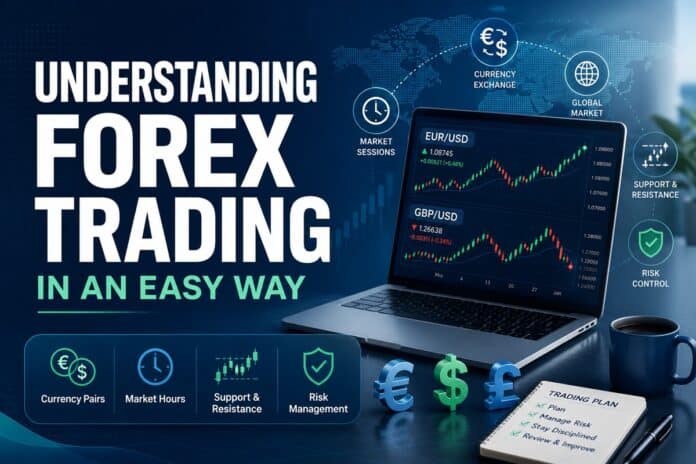
Currencies always trade in pairs, written out like EUR/USD or GBP/USD. The first currency listed is the base, and the second is the quote. The market price simply tells you how much of the quote currency it takes to buy one single unit of the base. You are essentially betting on a tug-of-war between two different countries’ economies.
The Reality of Market Hours
The coolest and most dangerous thing about forex is that it runs 24 hours a day, five days a week. It follows the sun around the globe, shifting across four main trading hubs: Sydney, Tokyo, London, and New York.
But here is the trick: you do not want to trade when the market is quiet. If you trade during the dead hours, prices barely crawl, meaning you sit in positions forever, paying minor fees for no reason.
The magic happens during the session overlaps. When Europe is finishing its day, and New York is opening up, the sheer volume of money entering the system causes clean, sharp price movements. That volatility is where you actually find room to make a profit.
How to Keep It Simple
New traders break their brains trying to use twenty different color-coded technical indicators on their screens. You don’t need them. Stick to raw price charts and look for two things: support and resistance.

Think of support as a price floor. It is a level where the price has dropped multiple times in the past, but always bounced back up because buyers realized it got cheap. Resistance is the ceiling.
It is a high point where sellers consistently dump the currency because they think it is overpriced. Instead of guessing what happens next, you just draw simple lines at these floors and ceilings, wait for the price to hit them, and react based on whether the level holds or breaks.
The Only Rule That Matters
You can learn charts in a week, but managing your risk takes real discipline. The absolute biggest trap is letting greed or panic run your trades. The market doesn’t care about your feelings, and it will move erratically during major economic news releases.
To survive, you treat every trade like a cold business decision. You never risk more than 1% of your account on a single position. The moment you enter a trade, you type in a stop-loss order. If a position goes bad, the platform automatically kills it the second it hits your risk limit.

Losing a tiny, predictable amount of money doesn’t hurt. It just means you took a small hit, kept your capital intact, and lived to take the next high-probability setup tomorrow.
Conclusion
Getting into forex doesn’t require an economics degree. It requires you to pick a major, liquid currency pairs, track the busy session overlaps, read simple floors and ceilings on a chart, and cut your losses fast with automated stop-losses. Keep your risk tiny, stay patient, and let the math do the work over time.